Bulk keratinase for renderers, tanneries, wool scourers and by-product processors reducing feather, hair, wool and bristle waste. Wholesale supply, quoted per order.
Unlock value from the world’s toughest keratin streams.
Feathers, hair, wool, bristles, horn particles, and hide residues are not standard protein waste. Their keratin structure is mechanically tough, water-resistant, and slow to break down under ordinary processing conditions. For poultry processors, renderers, wool scouring operations, tanneries, pet-care waste aggregators, and brush or bristle manufacturers, that resistance can translate into high disposal volume, odor risk, poor handling, and limited recovery value.
Keratinase Enzyme helps convert keratin-rich solids into smaller, more manageable protein fragments under controlled process conditions. The result is not just degradation for its own sake. It is a practical waste-management tool for reducing bulk, improving slurry behavior, supporting downstream separation, and creating a more consistent output stream.

Keratinase Enzyme Solutions supplies keratinase in bulk to poultry processors, renderers, tanneries, wool scouring operations, bristle manufacturers and waste-treatment contractors. Pricing is quoted per order.
Reducing a keratin waste stream? Send the product you need, the quantity per order or per month, and the destination country. Request a quote
Keratinase targets the dense protein architecture that gives keratin materials their strength. When the substrate is properly prepared, the enzyme can help open the fiber structure, soften rigid material, and release soluble peptides from waste that would otherwise remain slow-moving and disposal-heavy.
In industrial terms, keratinase can support:
Keratin is designed for durability. Its tightly packed structure, crosslinked chemistry, and hydrophobic fiber surfaces resist simple hydration and conventional biological breakdown. That is why untreated feather, hair, wool, and bristle streams often require mechanical reduction, thermal input, extended residence time, or costly hauling.
A keratinase-based workflow gives operations teams another lever: biochemical deconstruction matched to the real substrate mix.
Instead of relying only on heat, pressure, or landfill diversion, processors can design a conversion step around substrate preparation, moisture access, mixing behavior, residence time, and downstream separation targets.
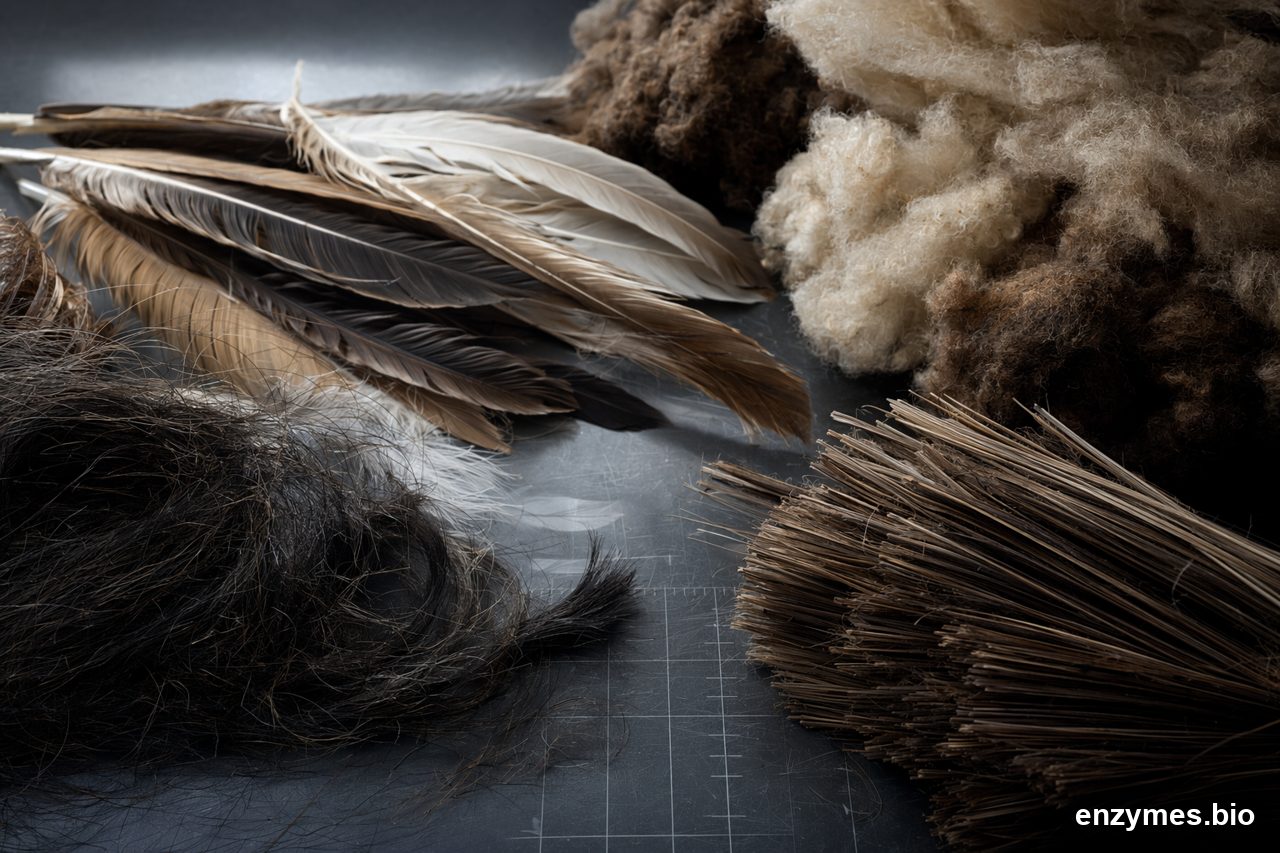
Keratinase is typically evaluated as part of a defined waste-treatment sequence, not as a drop-in afterthought. Strong results depend on giving the enzyme access to the material surface and maintaining a stable process environment.
Common integration points include:
Pre-sizing and wetting
Feather, hair, wool, and bristle streams are easier to treat when dense clumps are opened and moisture is distributed evenly.
Controlled reactor or tank addition
Keratinase is introduced into a managed process window selected for the waste stream, mixing capacity, and desired conversion level.
Residence-time optimization
The objective may be partial softening, bulk reduction, soluble peptide generation, or preparation for a secondary treatment stage.
Separation or downstream handling
Treated solids and liquors can be routed to dewatering, blending, recovery, digestion, composting, or other approved plant pathways.
Performance monitoring
Practical indicators include visual fiber opening, slurry consistency, solids reduction, filtration behavior, odor control, and output uniformity.
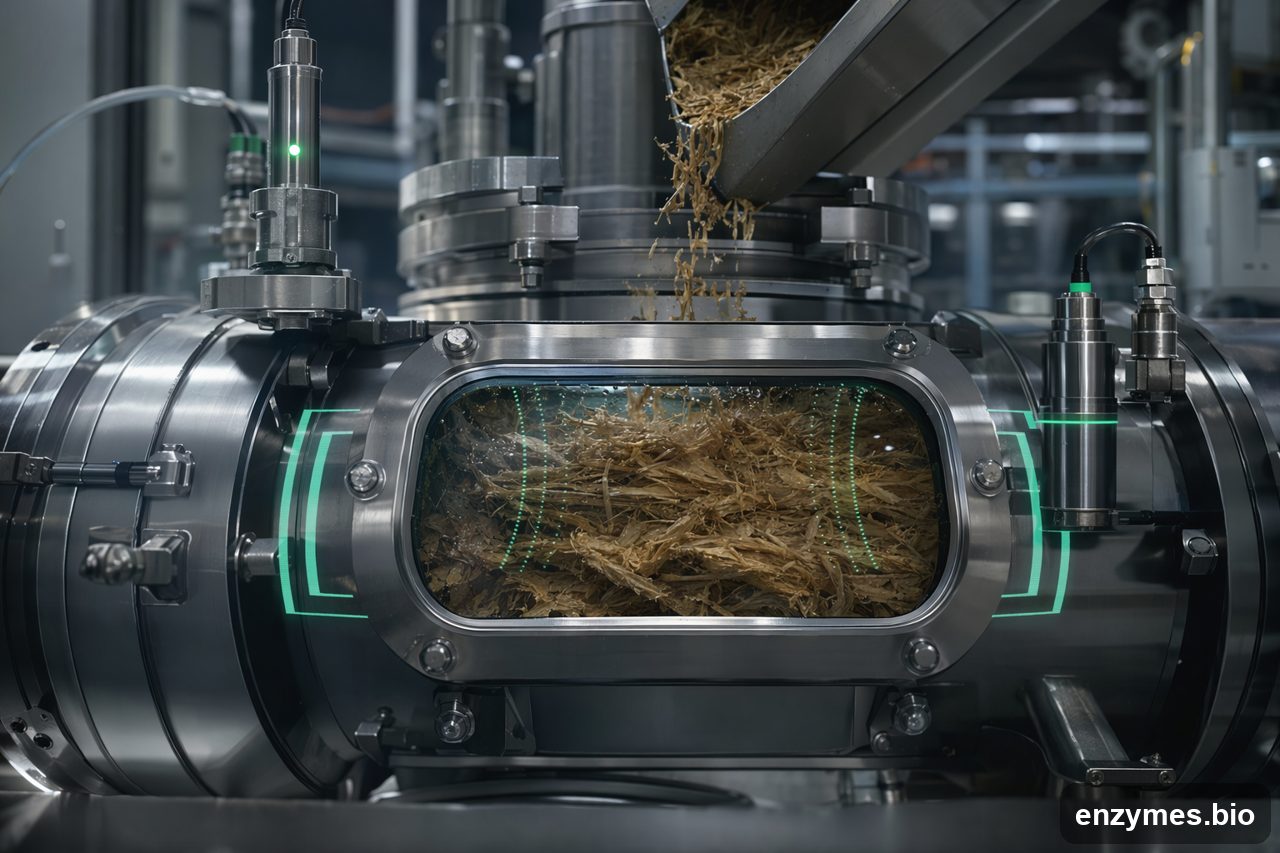
Keratin-rich waste rarely arrives as a perfect single material. It may contain water, fat, blood residues, salts, soil, surfactants, tanning chemistry, labels, packaging fragments, or mixed animal fibers. A useful keratinase program must account for that reality.
Keratinase Enzyme Solutions evaluates keratinase selection around:
Keratinase is most valuable when it changes an operational cost center into a more controlled conversion step. Depending on the stream and site goals, buyers typically evaluate it against measurable outcomes such as:
The commercial case is strongest when enzyme use is tied to a defined target: kilograms of difficult waste reduced, handling time saved, dewatering improved, or a downstream outlet made more consistent.
Feather streams are abundant, bulky, and highly resistant. Keratinase can support controlled feather softening and peptide release before dewatering, digestion, recovery, or approved disposal pathways.
Offcuts, fines, scouring residues, and rejected wool materials may benefit from enzymatic opening where mechanical treatment alone is inefficient or produces inconsistent results.
Animal hair, hog bristles, and mixed grooming residues can be difficult to compact or digest. Keratinase can help reduce rigidity and improve slurry behavior in managed systems.
Where compatible with site chemistry and discharge rules, keratinase may support treatment of selected protein-rich side streams before separation, biological treatment, or recovery operations.
To recommend the right keratinase grade and use strategy, Keratinase Enzyme Solutions typically asks for:
A small amount of substrate detail at the start helps avoid overdesign and makes pilot testing more meaningful.
A practical keratinase evaluation usually moves through three stages:
The goal is to establish a reliable operating envelope before production-scale adoption.
Wholesale and bulk keratinase for renderers, tanneries, wool and bristle processors, waste-treatment operators and distributors. Include:
A short description of volume, moisture and handling problems helps us answer faster. Pricing and terms are quoted per order. Request a quote
Tell us your application and volume — we reply with pricing and lead time.
We have received your message. We will reply by email.