Bulk keratinase for feather meal producers, renderers and feed ingredient makers upgrading feather protein. Dosing starting points, storage, and wholesale supply quoted per order.
Unlock value from the world’s toughest keratin streams.
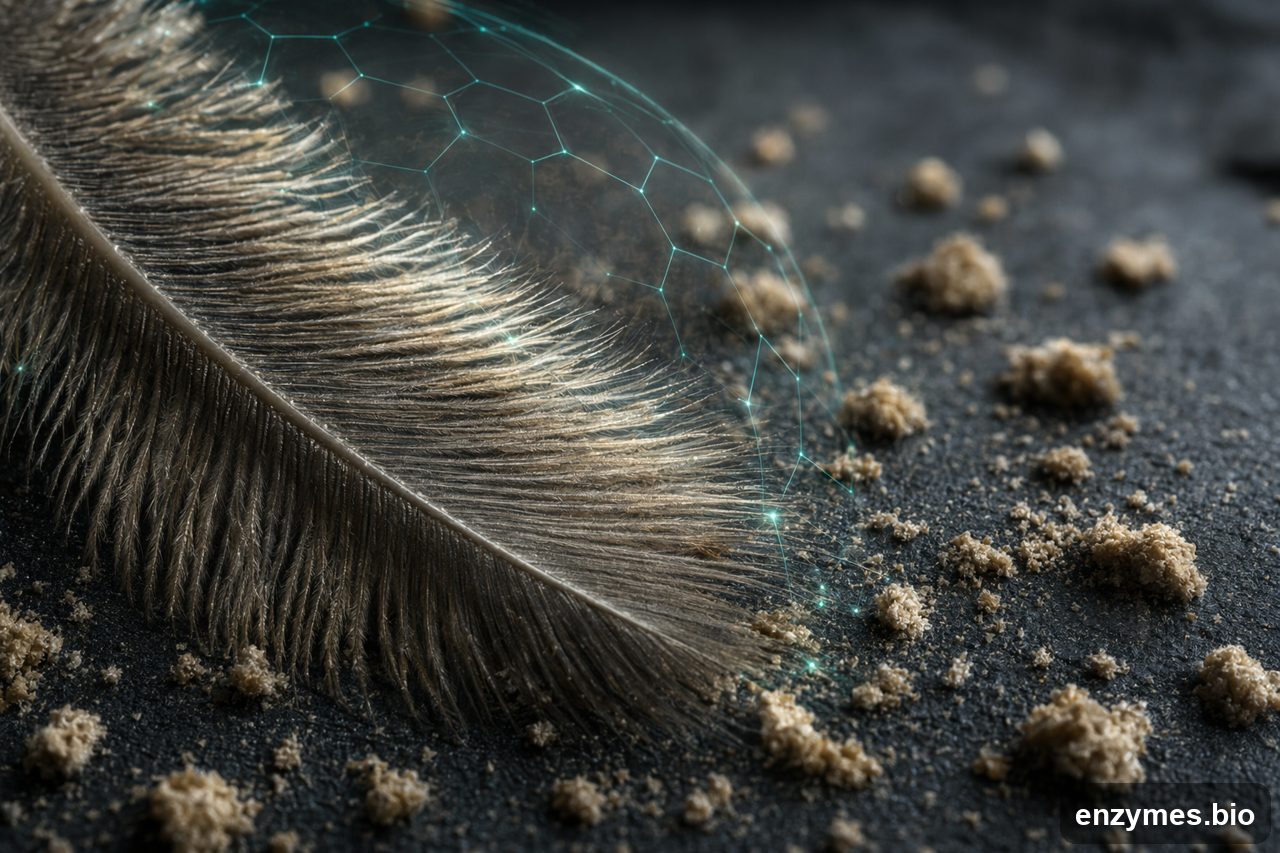
Feather meal carries concentrated protein, but native keratin is built to resist processing: dense fibers, crosslinks and poor water access limit how much of that protein becomes available, and lot-to-lot results drift. Keratinase Enzyme converts keratin-heavy feather streams into more accessible protein fractions that are easier to dry, blend and specify.
Keratinase Enzyme Solutions supplies keratinase in bulk to feather meal producers, rendering plants, feed ingredient manufacturers, aquafeed and pet food formulators, and the distributors who serve them. Pricing is quoted per order.
Upgrading feather protein? Send the product you need, the quantity per order or per month, and the destination country. Request a quote
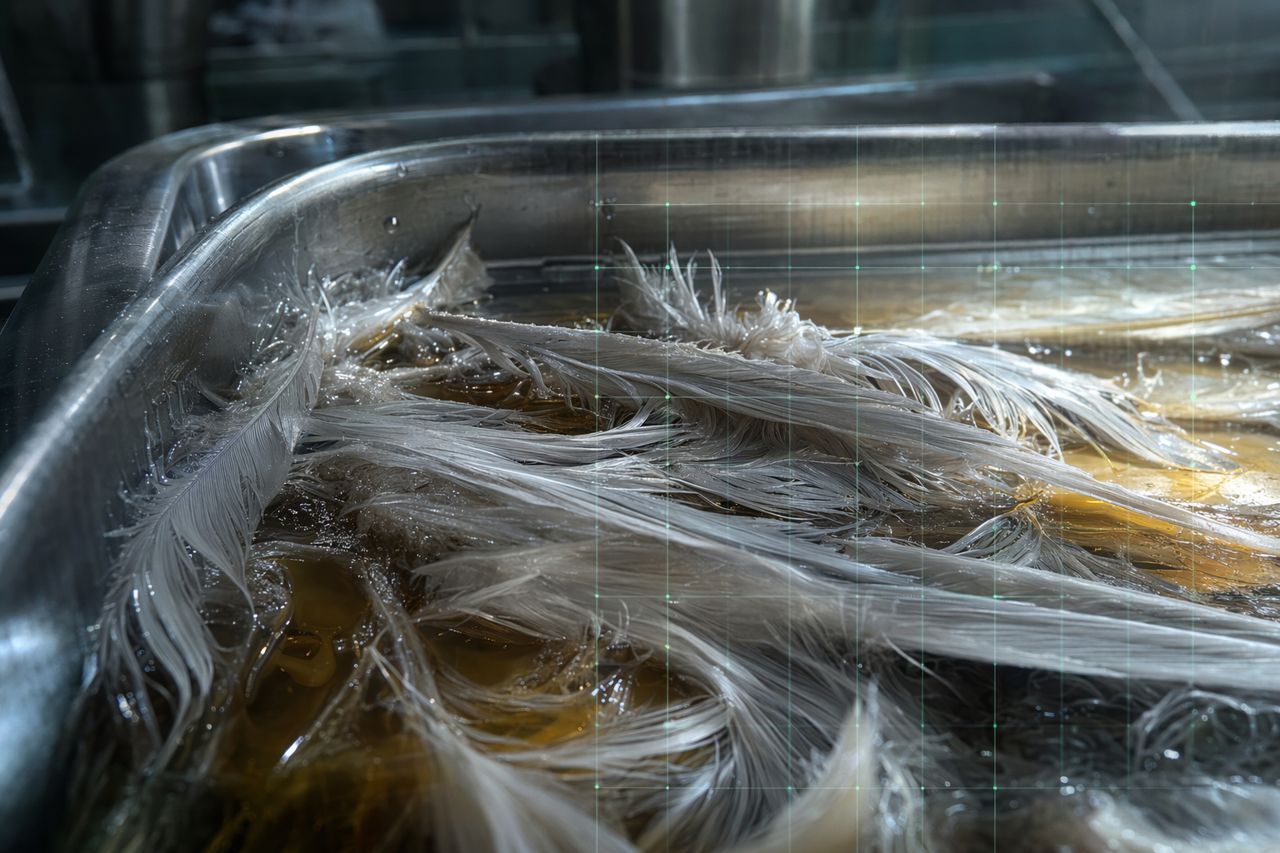
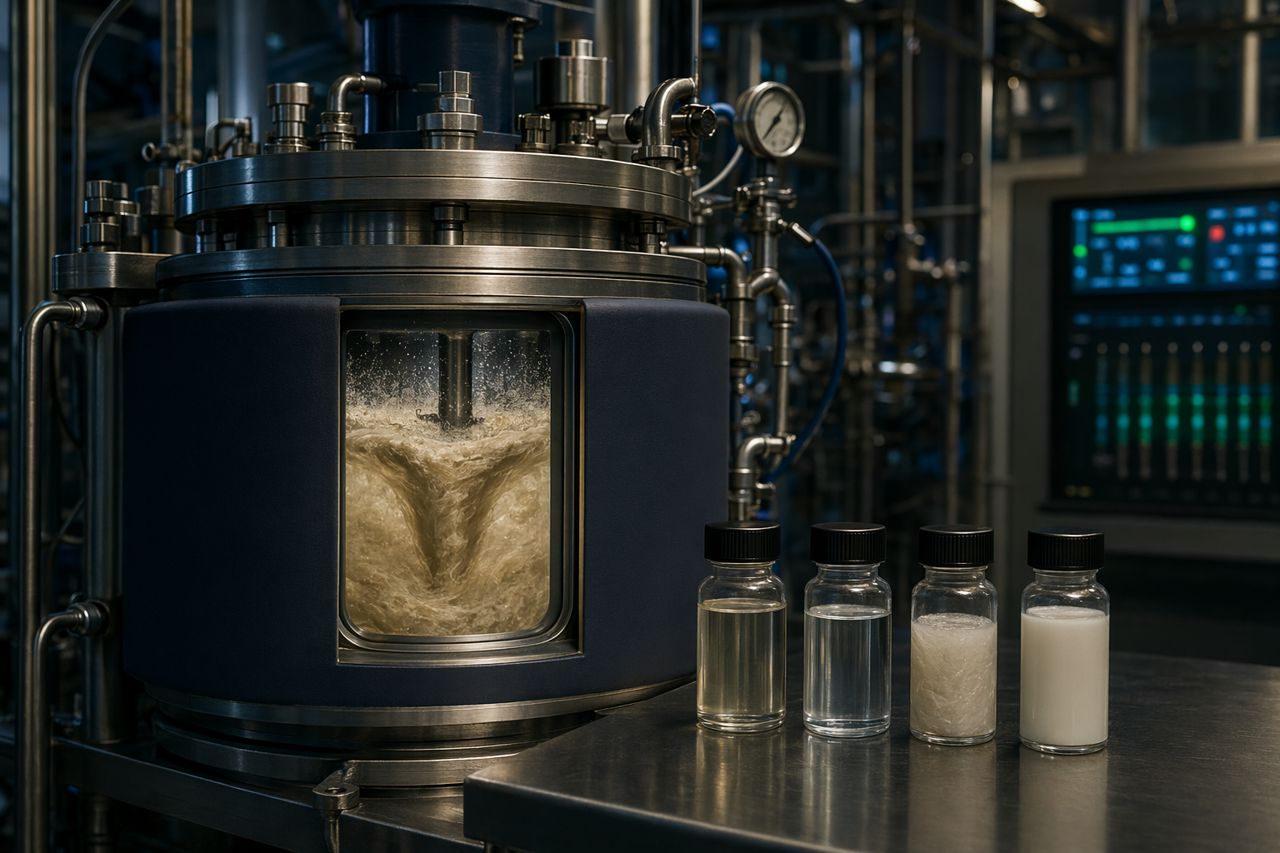
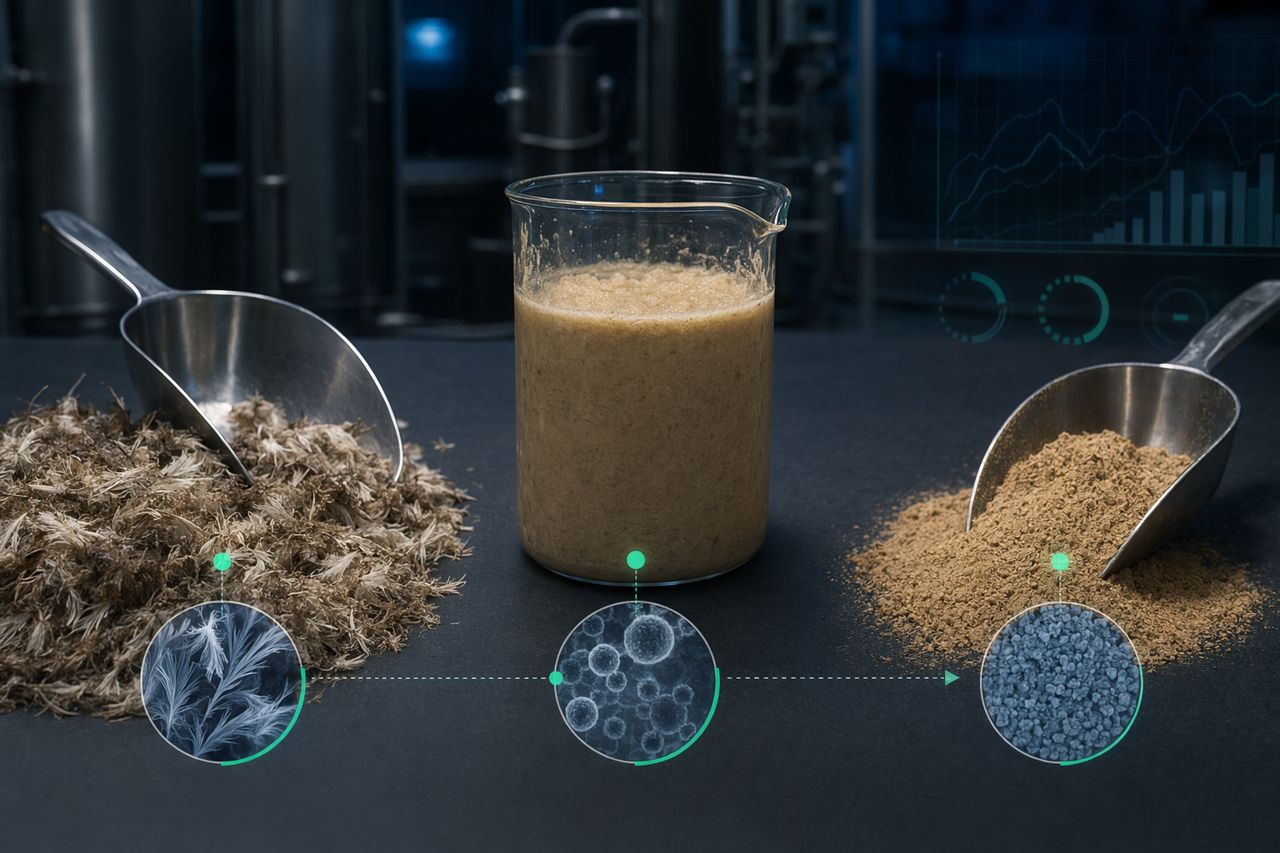
Keratinase targets the structural proteins that make feathers resist ordinary proteolysis. In a prepared feather slurry it opens the fiber surface, breaks down intact feather structure and releases soluble peptide material.
For a feed plant the value is a protein intermediate that can be qualified against plant and formulation metrics:
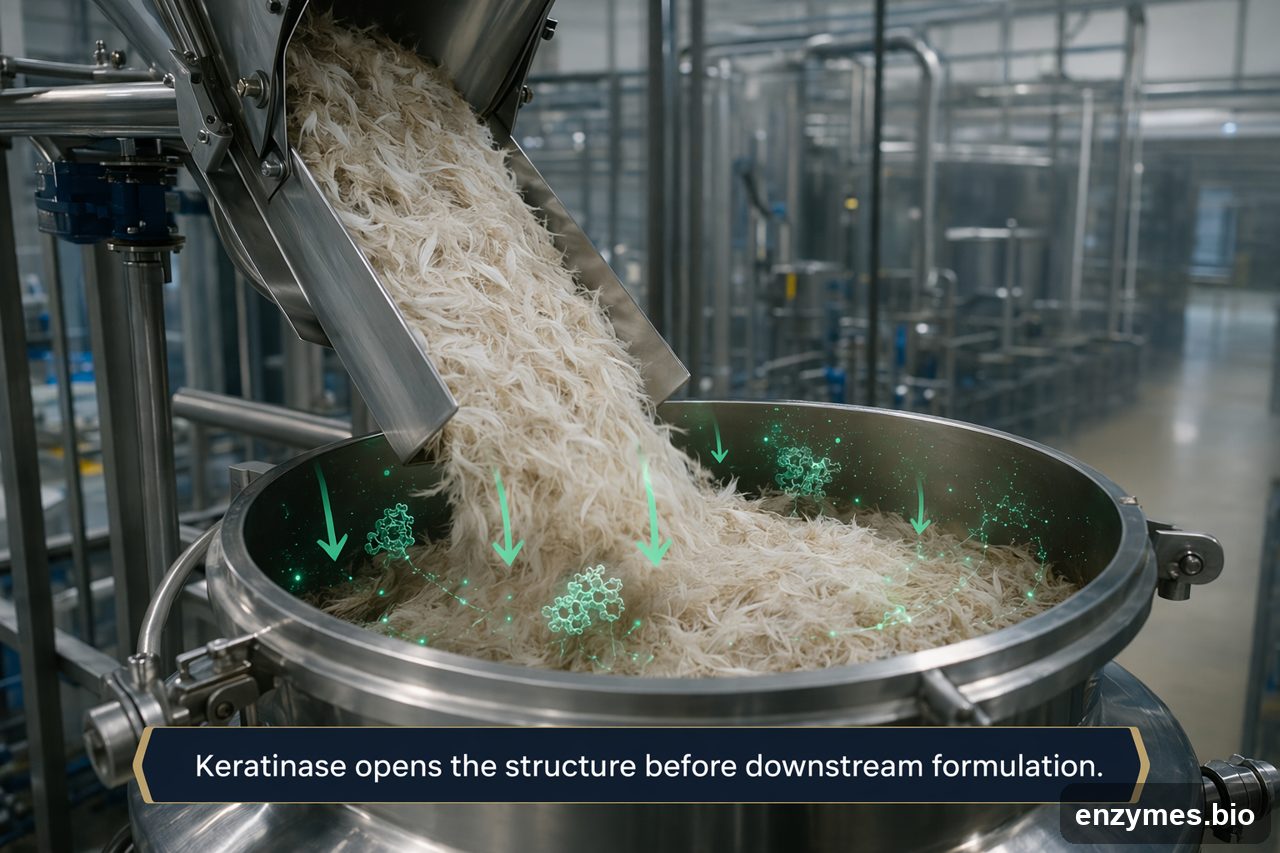
Keratinase can be evaluated around existing feather meal and co-product lines. The addition point depends on substrate preparation, solids loading, thermal history, mixing and the target protein specification.
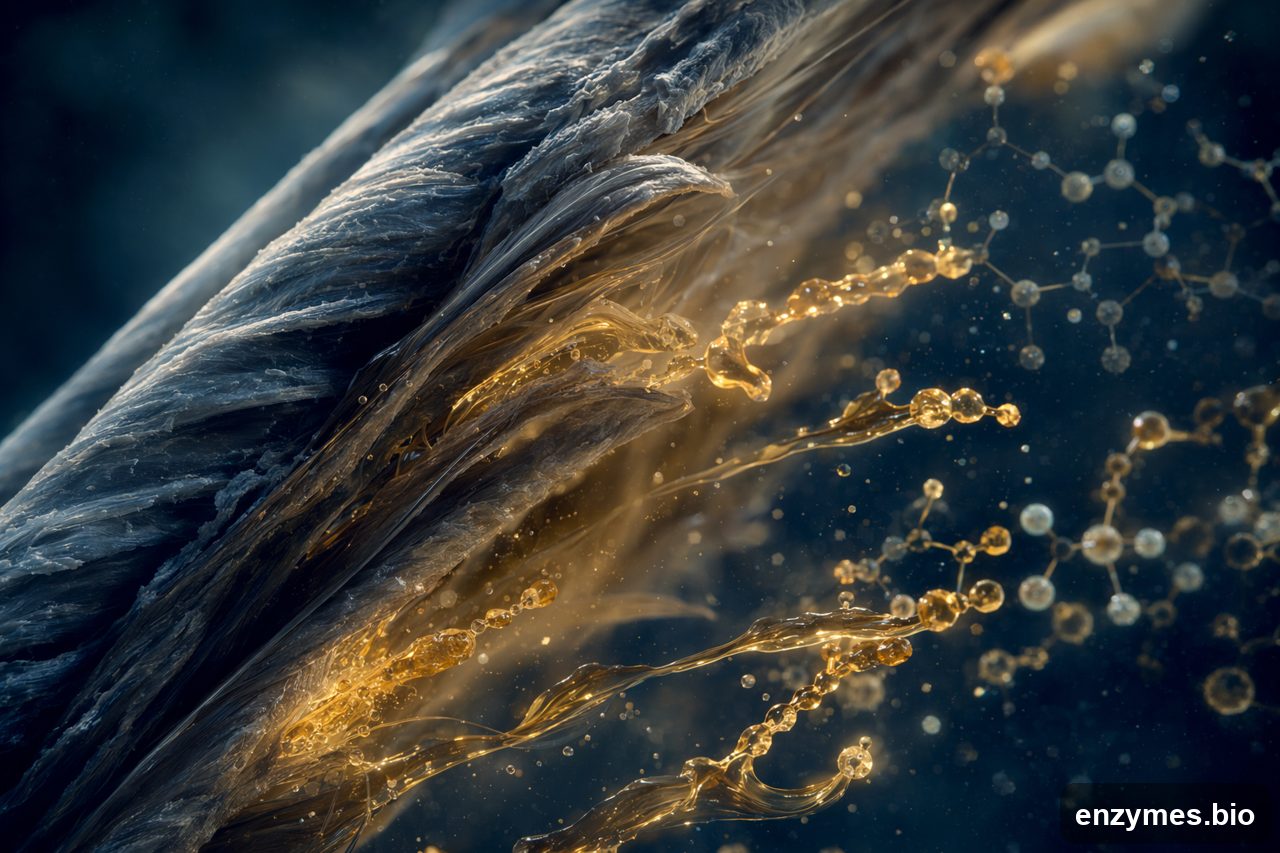
The aim is an operating window the plant can hold: substrate in, enzyme contact, conversion hold, stop step, downstream handling.
Industrial keratinase concentrate comes in 25 kg drums and 1 kg bags, for leather and feed use. The recommended dose depends on what is being processed. For complete feed, the recommended addition is 10-25 g per tonne. For feather and hair processing, it is 5-10 kg per tonne of raw material. For protein processing in general, it is 2-5 kg per tonne of raw material. Treat these as starting points for a pilot and confirm them on your own feathers.
Keratinase is a broad-spectrum protease, so it also degrades collagen, whey protein and casein, both soluble and insoluble. Its main fields are feed, leather, cosmetics and medicine. Poultry farming has reached large-scale production, so feather waste keeps growing and its environmental impact is no longer small. That is the volume a feather-meal line has to work with.
The product shelf life is 12 months. Store it in a cool, dry, ventilated place away from light. Plan drum stock around that window before the first order.
Heat tolerance differs between keratinase enzymes, so ask about it whenever your process includes a hot step.
Keratinase is also used inside aquafeed formulas. One aquafeed program combined a keratinase concentrate with phytase and a protease blend, dosed at 400-500 g per tonne. The tested range was 300-600 g per tonne, with 400-500 g per tonne as the optimum. The goal was to replace 50 percent of the fish meal while keeping protein digestibility and fish growth equal to a high fish-meal control diet. The trial ran 56 days on crucian carp. It reported 14.8 percent higher weight gain and 9.7 percent better feed efficiency. Soy antigens in feces fell by 49-57 percent. That allowed 50-80 kg per tonne of extra soy meal while cutting dietary protein by 1-1.5 percent. Diet and species change the result, so use it as a reference case for your own trial design.
Keratinase is most relevant where incoming material carries a high keratin load:
Feather source, pretreatment and prior heat exposure change conversion behavior strongly, so qualify on your own material rather than on generic assumptions.
A good test plan separates the enzyme effect from pretreatment, water ratio, residence time and thermal history.
The finished ingredient must fit the market, species, local regulations, labeling pathway and your quality system. Keratinase Enzyme Solutions supports process-fit and application discussions; the buyer remains responsible for final product claims, registrations and end-use compliance in the target market. Questions to settle early:
Wholesale and bulk keratinase for feather meal producers, renderers, feed mills and feed-additive distributors. Include:
Pricing and terms are quoted per order. Request a quote
Tell us your application and volume — we reply with pricing and lead time.
We have received your message. We will reply by email.