How keratinase behaves with salts, surfactants, heat steps, preservatives and other enzymes, written for processors and formulators buying keratinase in bulk. Wholesale supply, quoted per order.
Unlock value from the world’s toughest keratin streams.
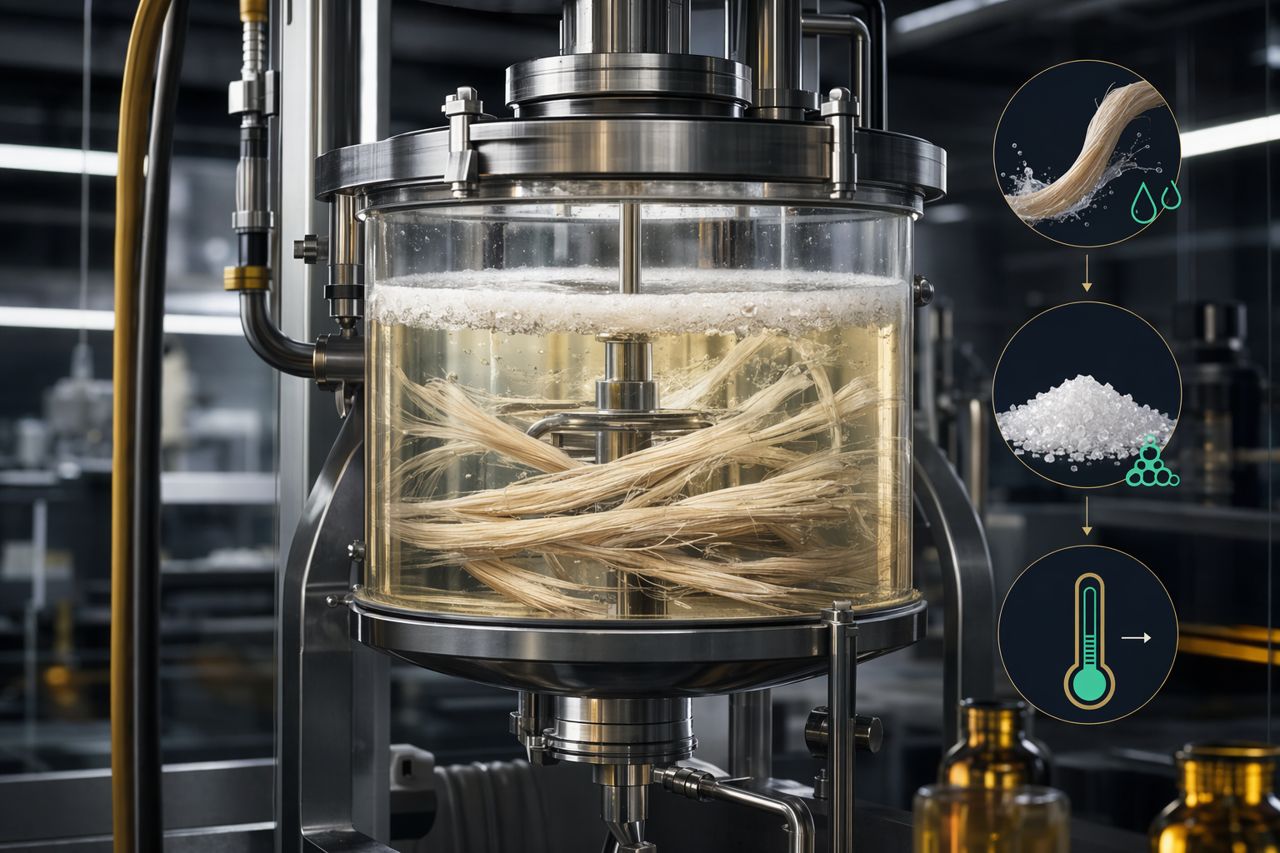
Keratinase Enzyme is used where dense keratin structures need to be loosened, solubilized, or converted into peptide-rich outputs. Feathers, hair, wool, bristles, nails, horn, and hide-adjacent residues do not behave like clean laboratory substrates. They arrive with salts, fats, dyes, soil load, preservatives, surfactants, heat history, and other processing chemistry already in the system.
Compatibility is therefore not a simple yes-or-no table. It is a controlled evaluation of whether keratinase can maintain useful performance in the actual matrix, sequence, contact time, and downstream specification of your process.
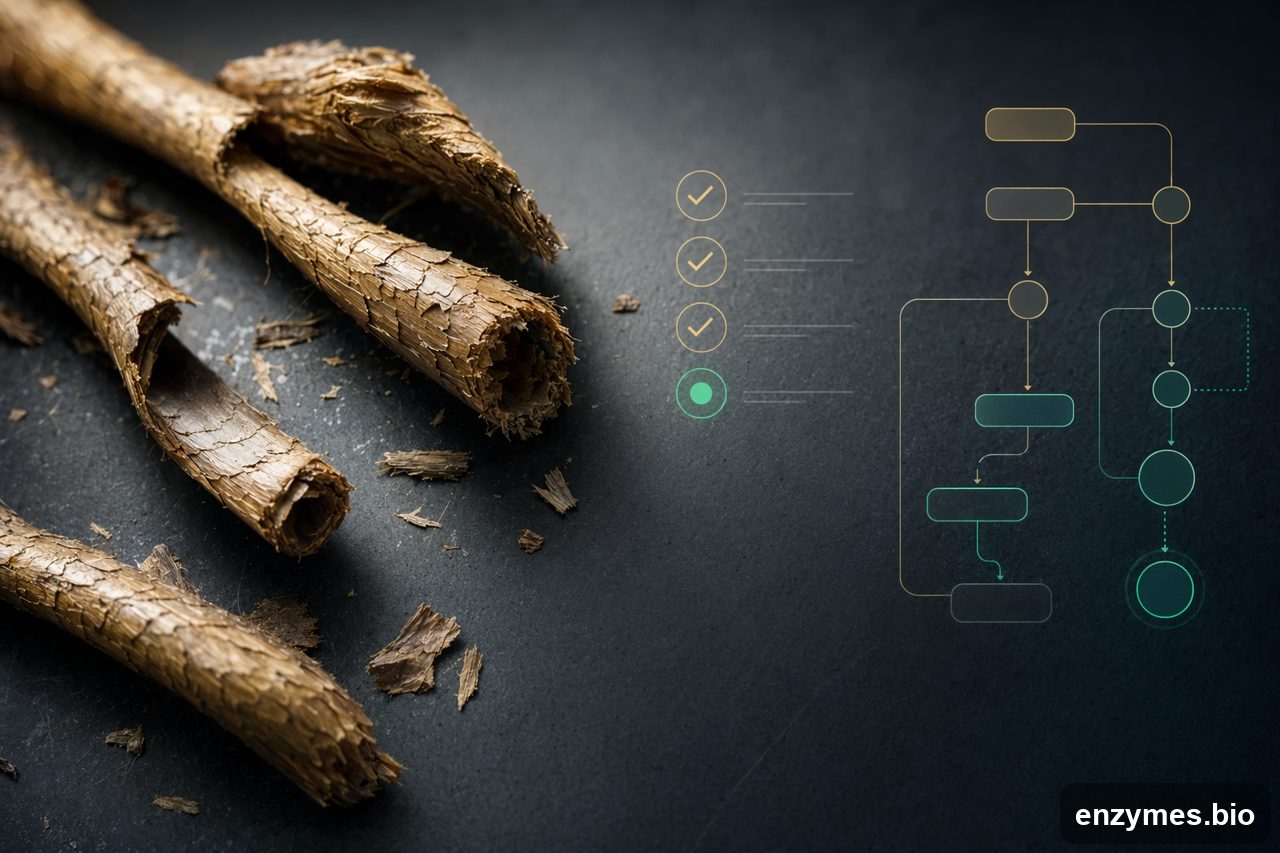
Keratinase Enzyme Solutions approaches compatibility from the processor's side of the line: what is already in the tank, what cannot be changed, what can be moved upstream or downstream, and what output value the enzyme is expected to unlock.
Keratinase Enzyme Solutions supplies keratinase in bulk to processors, formulators and distributors who need the enzyme to work inside a real process matrix. Pricing is quoted per order.
Screening keratinase against your process chemistry? Send the product you need, the quantity per order or per month, and the destination country. Request a quote
For keratinase, compatibility usually means four things:
A compatible ingredient is not always neutral. Some additives can help keratinase by improving wetting or opening the fiber surface. Others may reduce performance but still be acceptable if the process sequence, dose strategy, or residence window is adjusted.
Salts can be present from washing, curing, brining, preservation, mineral content, water hardness, or upstream processing. Their impact depends on type, concentration, pH environment, substrate load, and contact time.
If your process uses brines, mineral salts, alkaline builders, or hard process water, compatibility should be screened in the full matrix rather than in clean water. The right question is not whether salt is present. The right question is whether keratinase still delivers the required softening, solubilization, or peptide release under plant-like conditions.
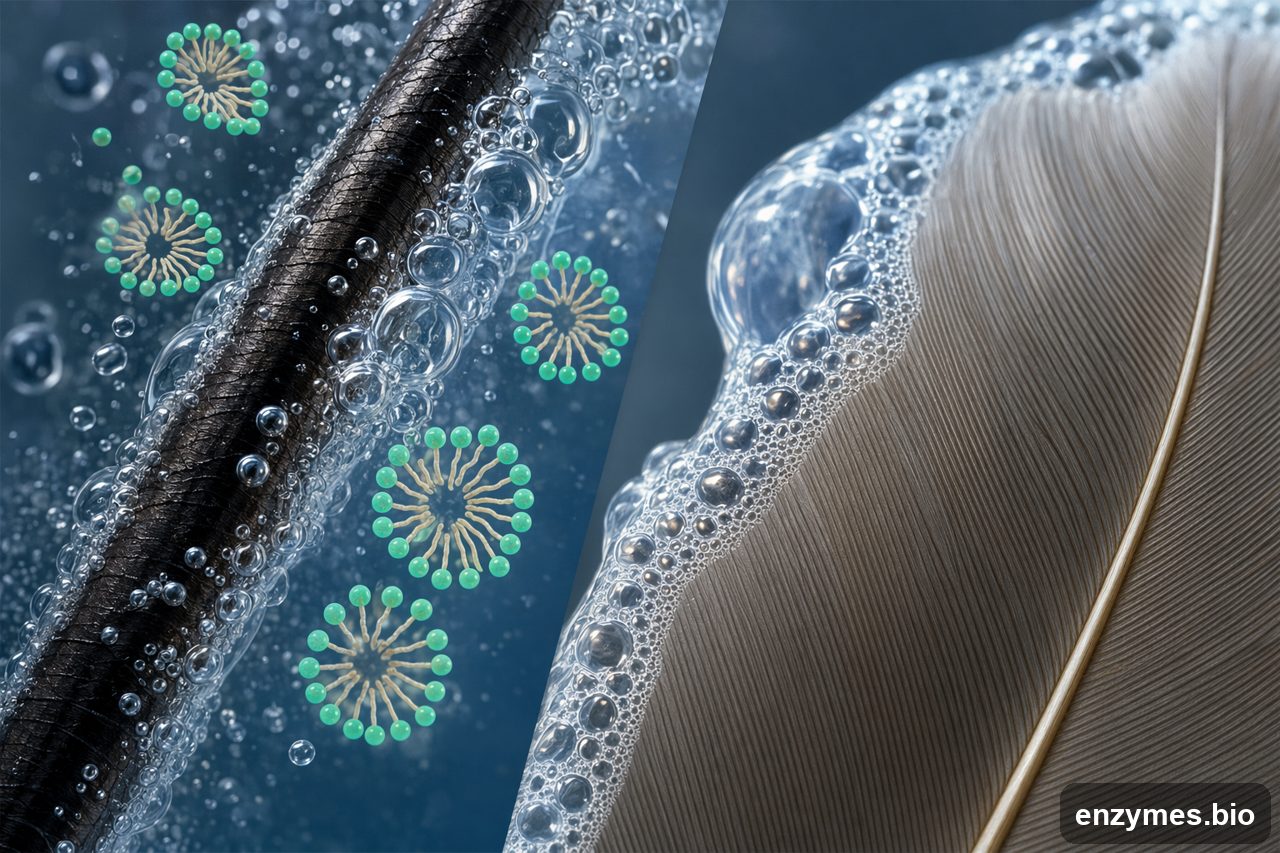
Keratin substrates are difficult because they resist wetting and have compact, crosslinked structures. Surfactants can either help keratinase reach the surface or interfere with enzyme structure.
Nonionic surfactants are often the first class evaluated when wetting improvement is required. They can support fiber penetration and dispersion without introducing strong charge interactions. Compatibility still depends on the surfactant chemistry, cloud behavior, residue profile, and process temperature.
Anionic surfactants can improve cleaning and wetting, but they may also interact with protein surfaces. In some systems they are usable at controlled levels; in others they suppress enzyme performance or create foam and separation issues.
Cationic surfactants require careful review. They can bind strongly to biological materials and may reduce enzyme access or activity. They are also relevant when treated keratin is going into coatings, conditioners, antimicrobial systems, or textile finishing sequences.
Do not evaluate surfactants only by whether the enzyme remains active in solution. Evaluate the whole system: foam, wetting speed, solids suspension, filtration, odor, color shift, viscosity, and final material performance.
Heat is both a process tool and a compatibility risk. Keratinase is a functional protein, and aggressive heat exposure can reduce its working life. At the same time, controlled heat can help hydrate keratin, reduce microbial burden, improve mixing, or terminate the enzyme reaction when the target conversion is reached.
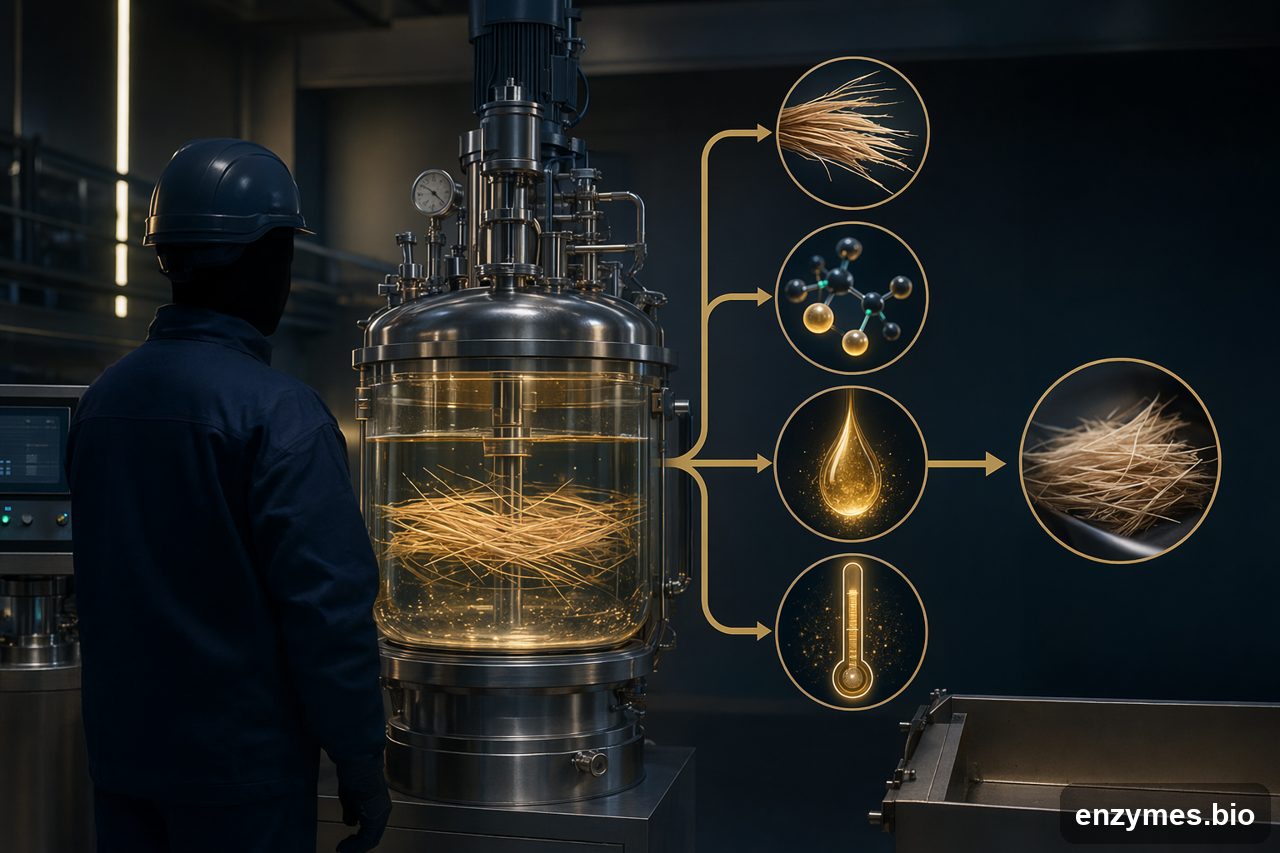
Avoid treating the enzyme as a generic additive that can be dropped anywhere in the line. Placement determines value. A small change in when keratinase is introduced can matter more than a large change in amount.
Keratin processing often uses alkaline conditions to swell fibers, assist cleaning, or open disulfide-rich structures. Keratinase may be selected for use in alkaline or near-neutral systems depending on grade and application.
Compatibility questions to resolve include:
A process can be chemically compatible but commercially poor if neutralization increases load, corrosion, wastewater demand, or drying cost. Compatibility should be measured against the full economics of the line.
Keratin strength is heavily influenced by disulfide bonding. Many plants use reducing agents, oxidizing agents, sulfites, peroxides, bleach systems, or related chemistry for cleaning, dehairing, bleaching, or structure modification.
These materials can strongly affect keratinase.
The best route is often staged: use chemistry to open the material, control residuals, then use keratinase for selective biological conversion.
Industrial keratin streams may carry preservatives, antimicrobial agents, cleaning residues, or sanitation chemicals. These are often necessary for plant hygiene, shipping stability, or raw material control, but they can reduce enzyme performance.
Watch for:
If these materials cannot be removed, keratinase should be screened directly in their presence. In many cases, the operational answer is not replacement; it is sequencing, dilution, rinse design, or addition point control.
Keratinase may be used alone or alongside other enzyme classes depending on the feedstock and target output.
Potential pairings include:
The risk is uncontrolled over-hydrolysis. Multiple enzymes can broaden conversion, but they can also change viscosity, filtration behavior, peptide profile, odor, and drying behavior. Sequence and stop-point control are critical.
Keratinase compatibility is not limited to chemistry. The process hardware matters.
Review:
Keratinase can only act where substrate, water, and enzyme contact each other. Poor wet-out, compacted solids, or inconsistent agitation can look like enzyme incompatibility when the real issue is mass transfer.
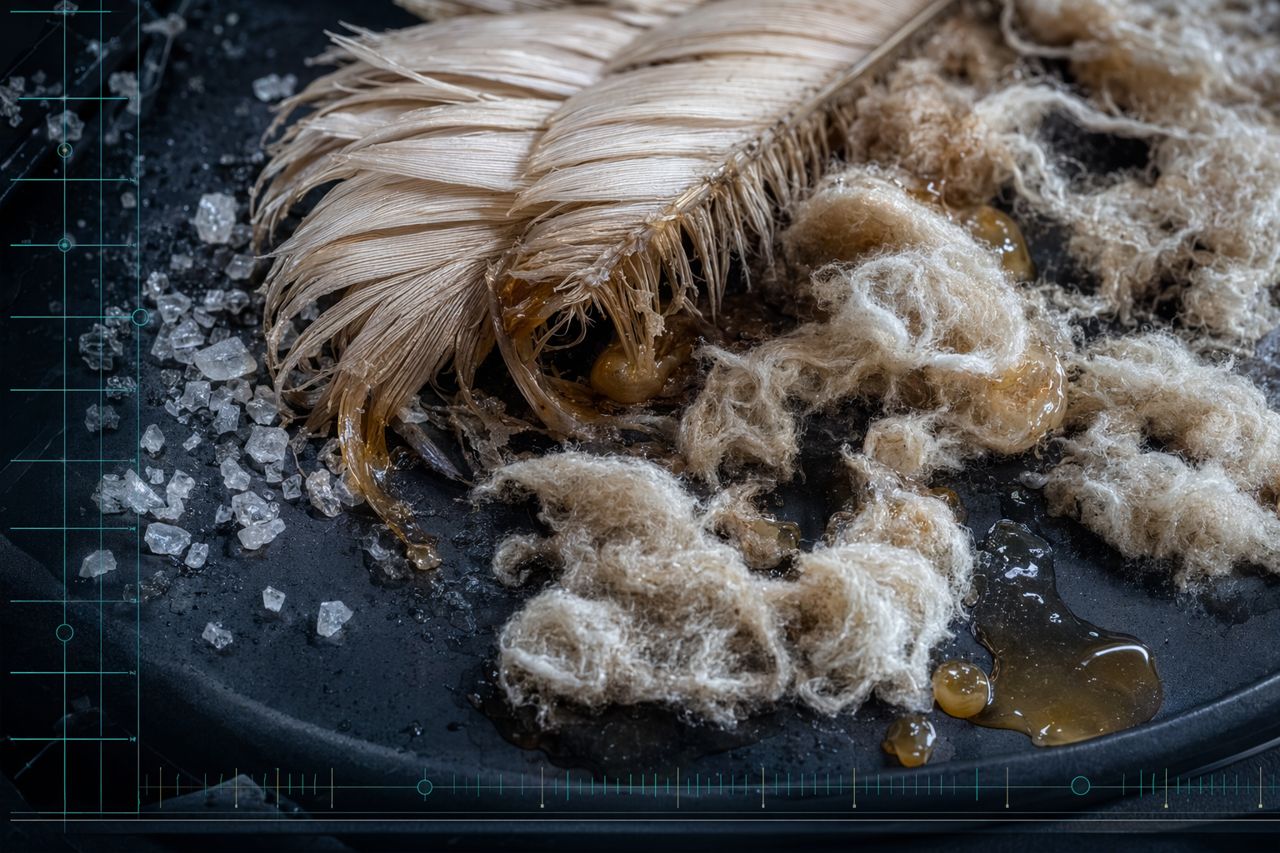
Feather substrates often contain fat, blood residues, minerals, sanitation chemistry, and variable moisture. Compatibility work should focus on solids dispersion, odor control, peptide profile, drying behavior, and nutritional or fertilizer targets.
In wool or fiber treatment, compatibility is tied to hand feel, tensile preservation, shrink control, dye uptake, whiteness, and wastewater profile. Surfactants, dyes, peroxide residues, and finishing agents must be considered.
Hide systems may include lime, sulfide-related chemistry, preservatives, salts, fats, and high organic load. Keratinase sequencing is especially important where the goal is selective hair or keratin modification without unwanted collagen damage.
When keratinase is used in formulated products, compatibility must address surfactant package, fragrance, preservative system, viscosity builder, packaging stability, and consumer-facing residue expectations.
A good compatibility study does not need to be complicated, but it must be realistic.
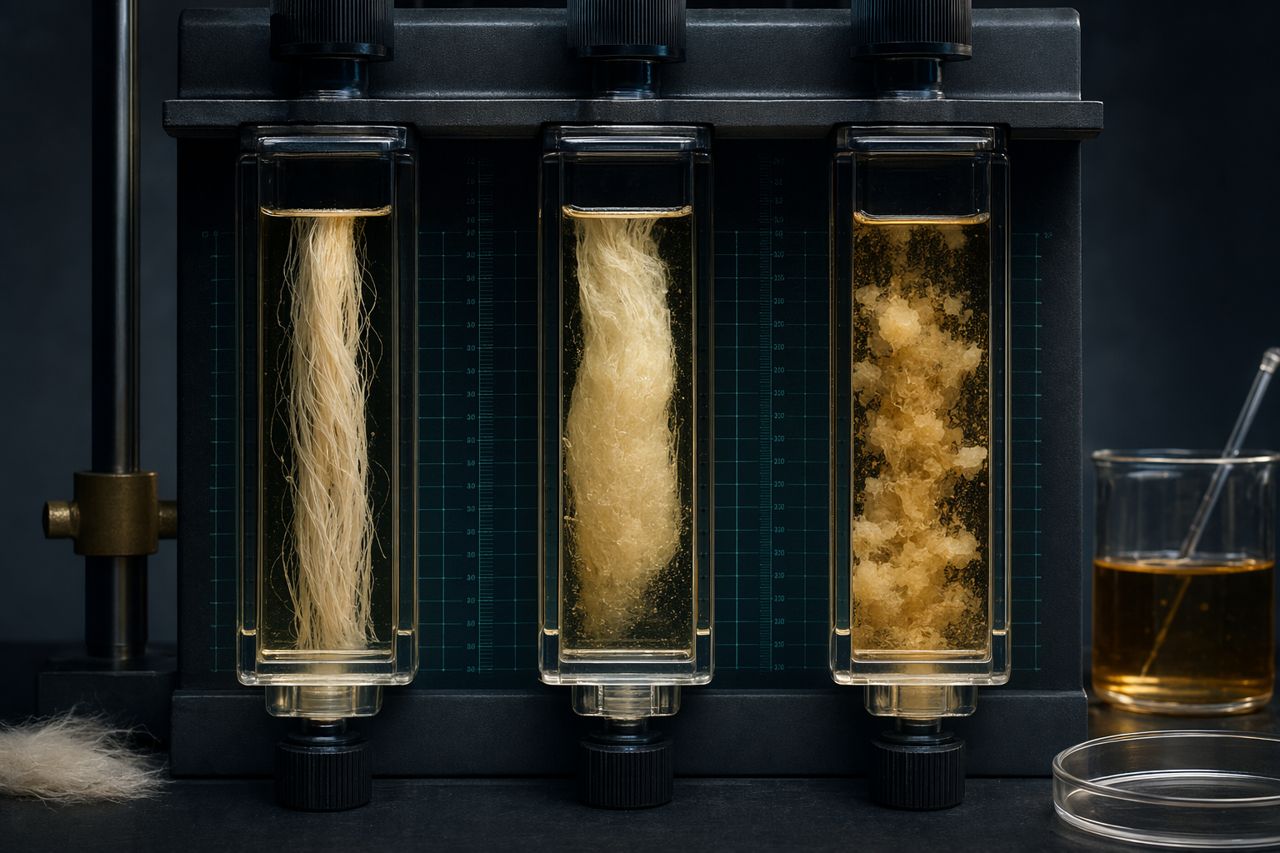
Include the same substrate form, pretreatment, water source, salts, surfactants, pH profile, and process aids used in production. Clean bench systems often overstate performance.
The same chemical may be compatible if added before the enzyme, after the enzyme, or after a rinse step, but incompatible when present during the active conversion phase.
Useful endpoints include:
Always compare against a no-enzyme control and a simplified enzyme-only lane. This separates true incompatibility from substrate variability, poor wetting, or mechanical limitations.
Investigate further if you see:
These signals do not always mean keratinase is the wrong tool. They usually mean the process window needs tightening.
When requesting keratinase for compatibility-sensitive work, provide the following if available:
The more complete the process picture, the faster a fit-for-purpose recommendation can be made.
Keratinase delivers value when it is placed inside a process architecture that lets it work. Compatibility is not about forcing the enzyme to tolerate everything. It is about aligning chemistry, temperature, contact time, substrate exposure, and stop-point control so keratin conversion becomes predictable.
For processors and formulators, that means fewer blind trials, cleaner scale-up decisions, and a better link between bench results and production economics.
Wholesale and bulk keratinase for processors, formulators and distributors. Include:
Pricing and terms are quoted per order. Request a quote
Often, yes, but salt type and total matrix matter. High ionic strength, hardness, and metal content should be evaluated with the actual substrate and process water.
Some are helpful, some are neutral, and some are disruptive. Nonionic wetting agents are commonly screened first, but the final decision should include foam, filtration, residue, and downstream performance.
Usually the best answer depends on why heat is being used. Heat can condition the substrate, stop the enzyme, or support sanitation. Aggressive heat exposure during the active enzyme phase should be assessed carefully.
Yes, when the process needs broader conversion. The key is controlling sequence and endpoint so the system does not over-hydrolyze or create downstream handling problems.
Testing keratinase in a clean bench system that does not include the plant's salts, surfactants, residues, solids load, heat sequence, or downstream constraints.
Tell us your application and volume — we reply with pricing and lead time.
We have received your message. We will reply by email.