Bulk keratinase for tanneries, leather processors and hair-waste treatment operators: enzymatic dehairing trials, hair and screening-solids conversion. Wholesale supply, quoted per order.
Unlock value from the world’s toughest keratin streams.
Leather production generates keratin-rich material at several points: loosened hair, epidermal residues, wool-bearing trimmings, screening solids and sludge fractions with a high protein load. Keratin's dense fiber structure resists ordinary hydrolysis, slows waste handling and limits recovery options.
Keratinase Enzyme gives tanneries a controllable biological route for loosening hair, opening keratin structure and converting hair-rich solids into more manageable peptide-containing streams. The value for a plant is concrete: better separation, easier pumping, smoother downstream treatment and more use from material that is otherwise hard to handle.
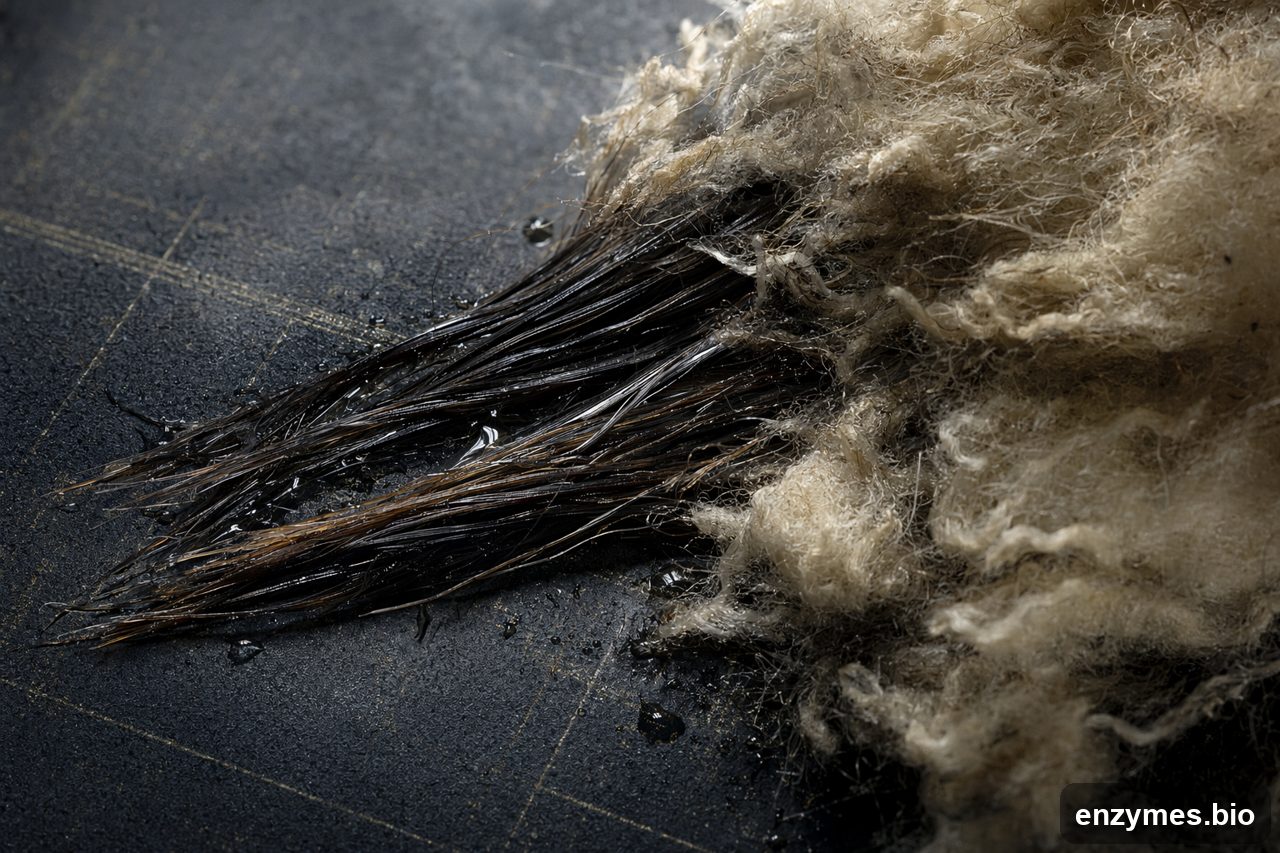
Keratinase Enzyme Solutions supplies keratinase in bulk to tanneries, leather chemical distributors, waste-treatment operators and by-product processors. Pricing is quoted per order.
Running a beamhouse or treating hair waste? Send the product you need, the quantity per order or per month, and the destination country. Request a quote
Keratinase targets the structural proteins found in hair, wool, feathers, bristles, and epidermal keratin. In leather operations, it can be applied where the goal is to weaken, loosen, digest, or pre-condition keratin-rich material without treating every solid fraction as generic organic waste.
Typical use cases include:
Keratinase is not a universal substitute for the entire leather beamhouse chemistry. It is a targeted conversion tool. The strongest programs treat it as part of a defined process window: substrate type, particle size, solids loading, temperature, pH, contact time, agitation, and separation method.
Hair and epidermal residues behave differently from collagen-rich leather substrate. Keratin is tougher, more cross-linked, and less accessible than many other proteins found in process water. If it is left untreated, it can create operating friction across the plant:
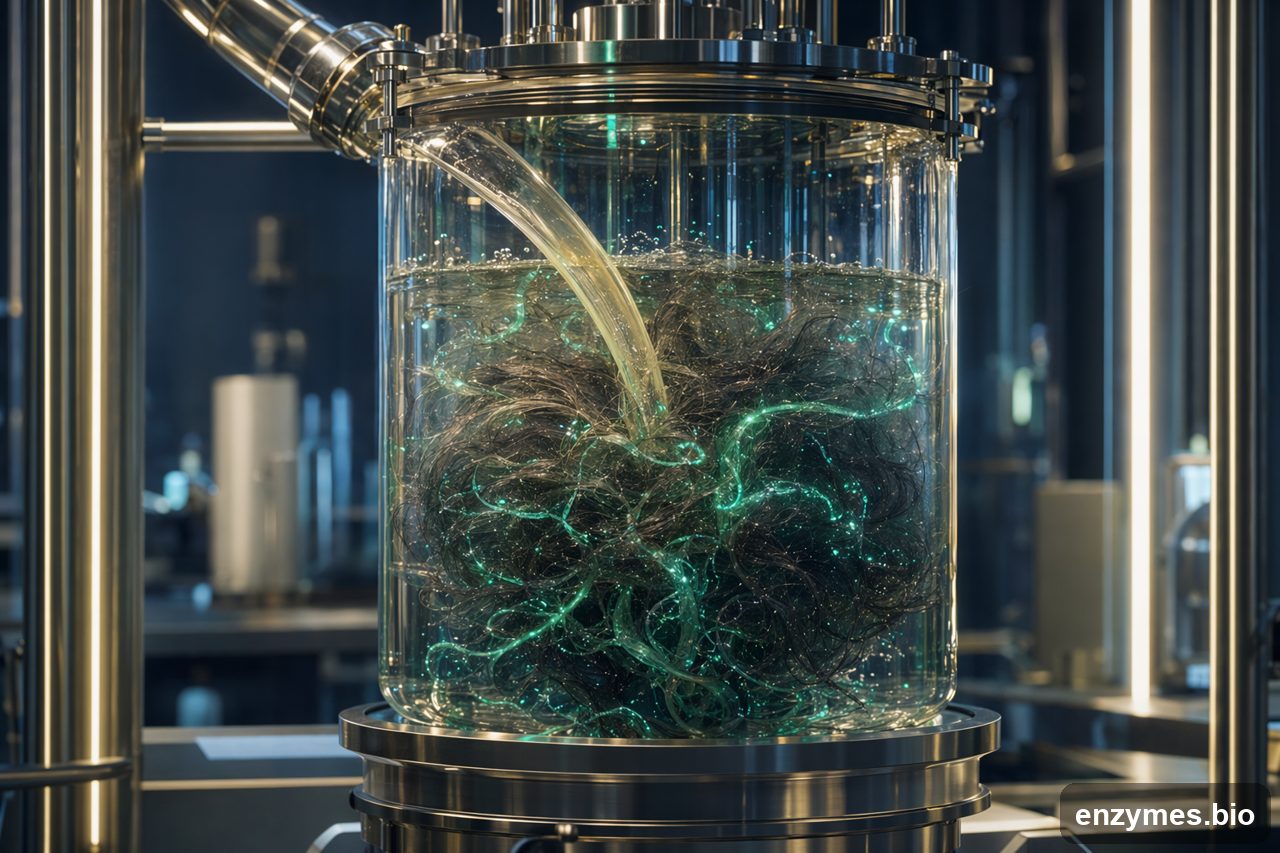
A keratinase-assisted approach gives operators a way to control the degree of breakdown rather than relying only on time, heat, high-alkali conditions, or broad chemical attack.
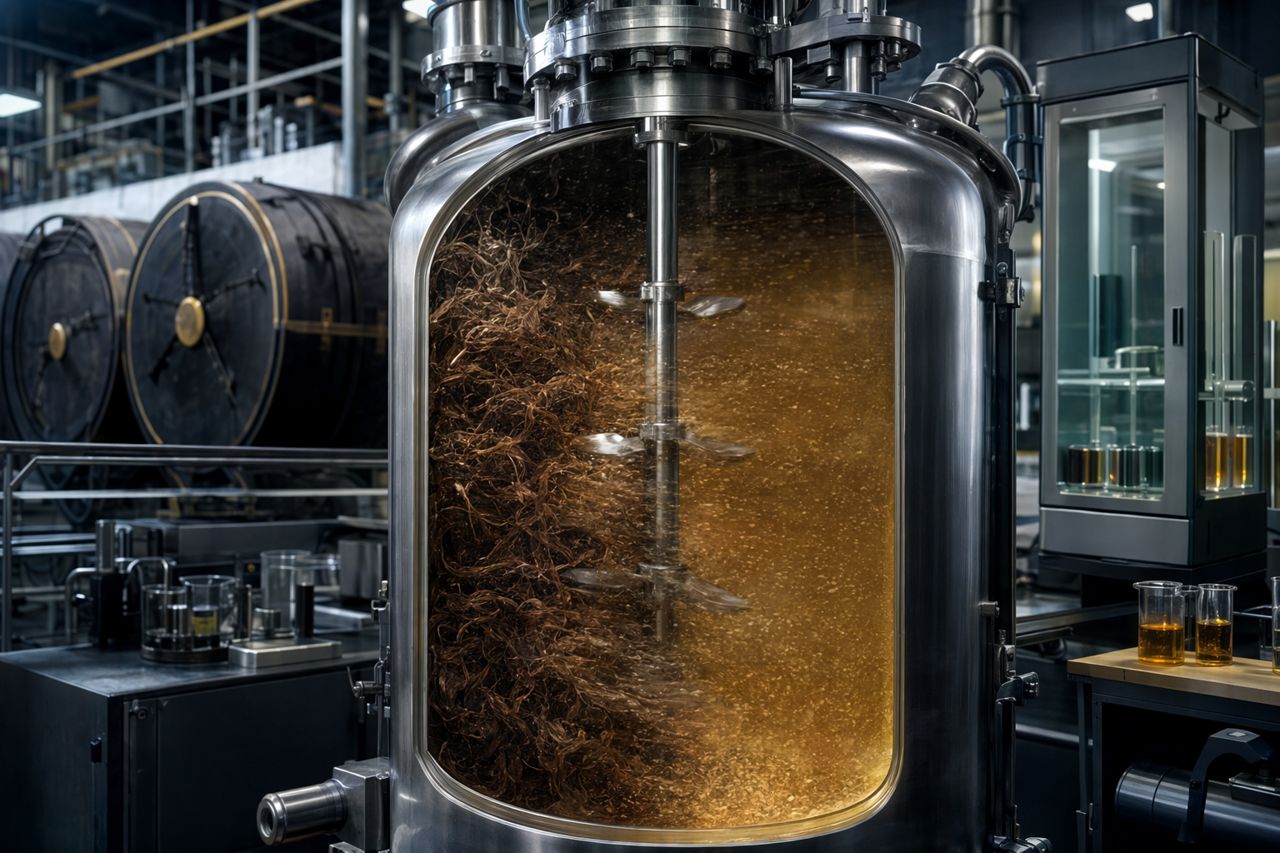
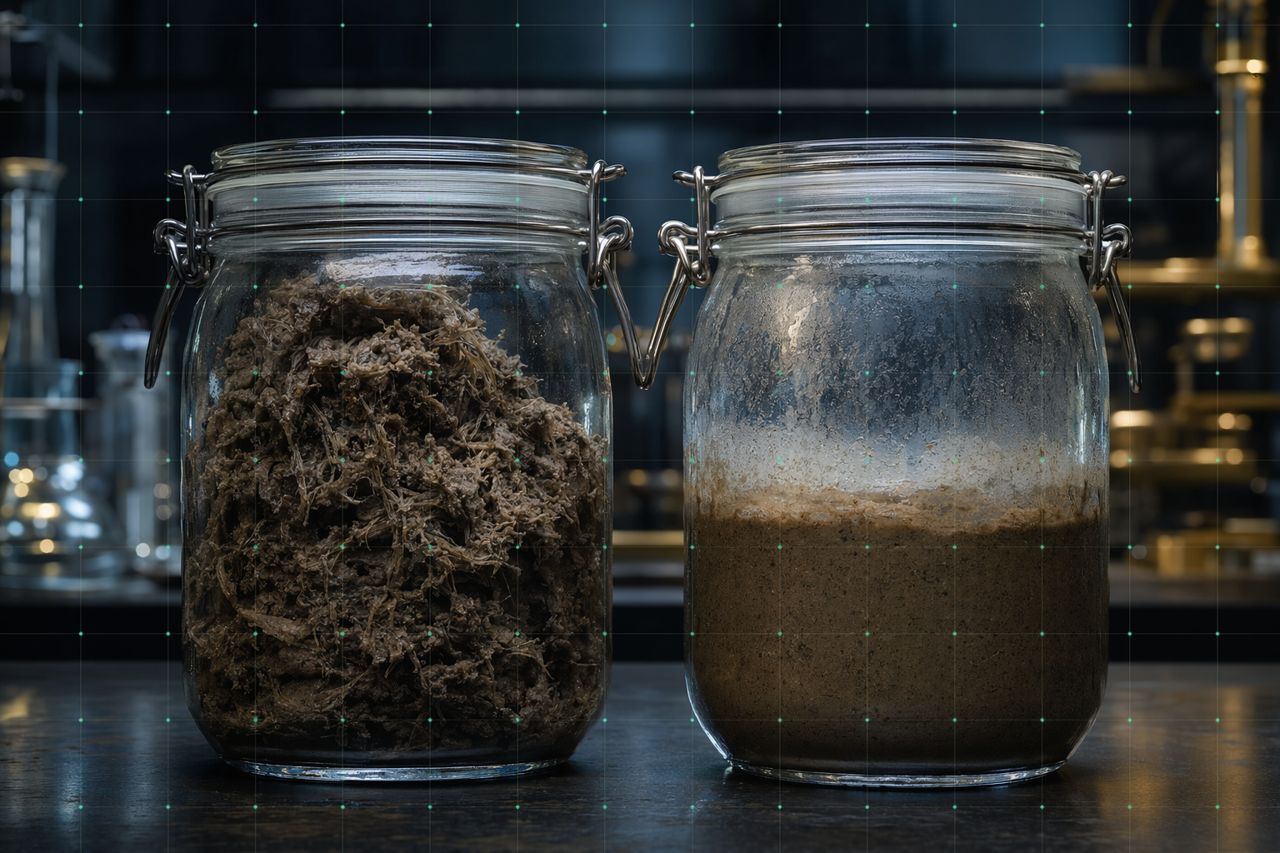
Recovered hair from unhairing and screening can be bulky, elastic, and difficult to homogenize. Keratinase can be used to open the hair fiber structure and reduce the material into a more uniform liquid or slurry phase. Depending on process objectives, the treated stream may be routed toward wastewater treatment, blending, drying, fertilizer-related outlets, or other permitted by-product pathways.
In selected beamhouse trials, keratinase may support hair loosening and epidermal removal strategies. The commercial objective is usually to reduce the burden of harsh chemistry, improve hair release behavior, and support cleaner downstream effluent profiles. Validation must confirm that the grain, collagen structure, and final leather quality remain within specification.
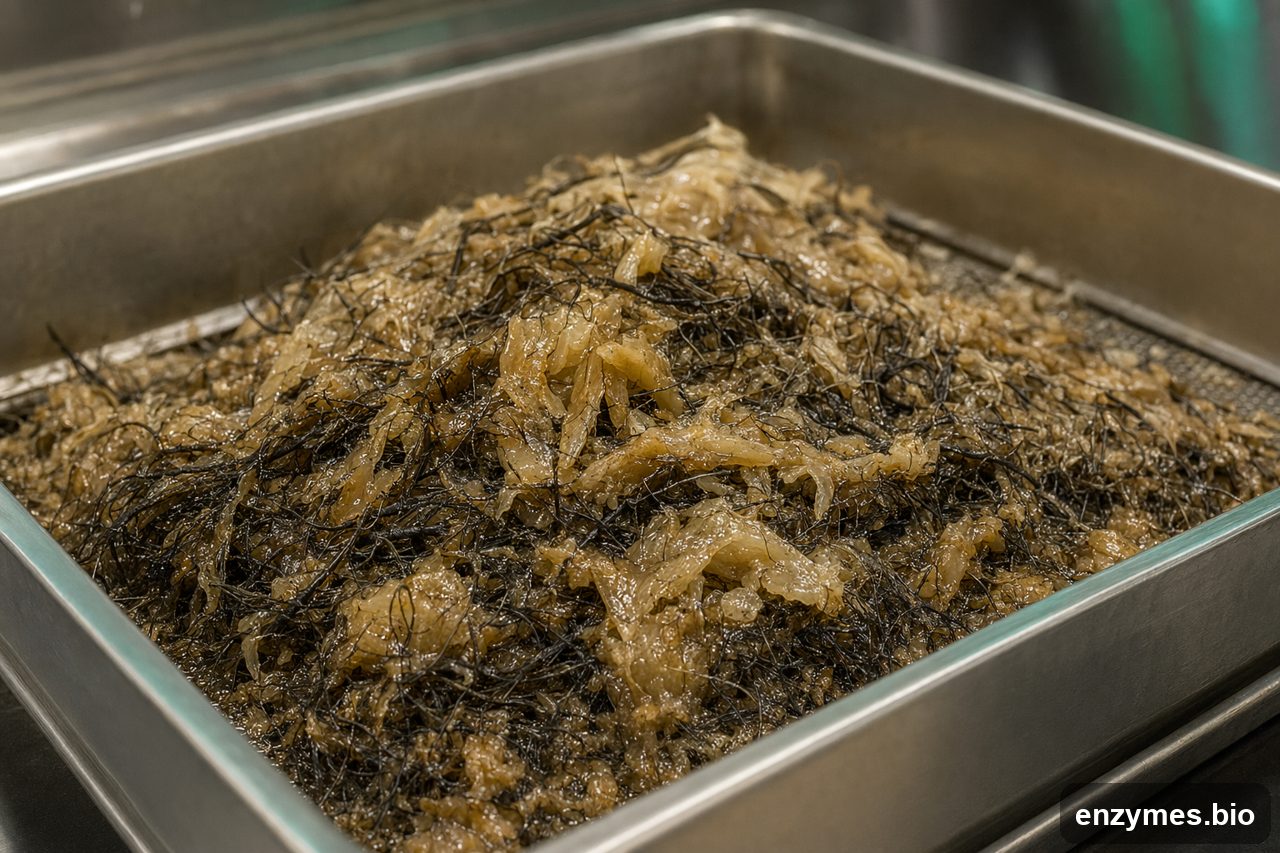
Tannery screens capture mixed organic material, including hair and epidermal fragments. Keratinase can help pre-condition these fractions before pumping, digestion, separation, or disposal. This is especially relevant where solids create bottlenecks in tanks, pipework, filters, or sludge dewatering equipment.
Where regulatory and quality requirements allow, enzymatic keratin conversion can support peptide-rich streams for further processing. The important question is not simply whether the material can be hydrolyzed. It is whether the resulting profile is consistent enough for the intended outlet.
The right keratinase program depends on plant reality. A drum process, batch tank, waste pit, stirred reactor, or continuous pre-treatment line will each impose different constraints. Keratinase Enzyme Solutions supports evaluation around the variables that determine conversion quality and operating value.
Key parameters to define include:
The best outcome is a defined treatment window that operators can repeat, measure, and adjust.
A successful keratinase implementation should connect to measurable plant outcomes. Depending on the starting stream and operating design, processors may evaluate:
Keratinase Enzyme Solutions frames enzyme use around operational economics: what changes in the plant, what becomes easier to control, and what downstream value becomes realistic.
Before scaling, a practical validation should compare treated and untreated material under realistic plant conditions. The test plan should be simple enough for operations teams to trust and detailed enough for technical buyers to quantify value.
Recommended evaluation points:
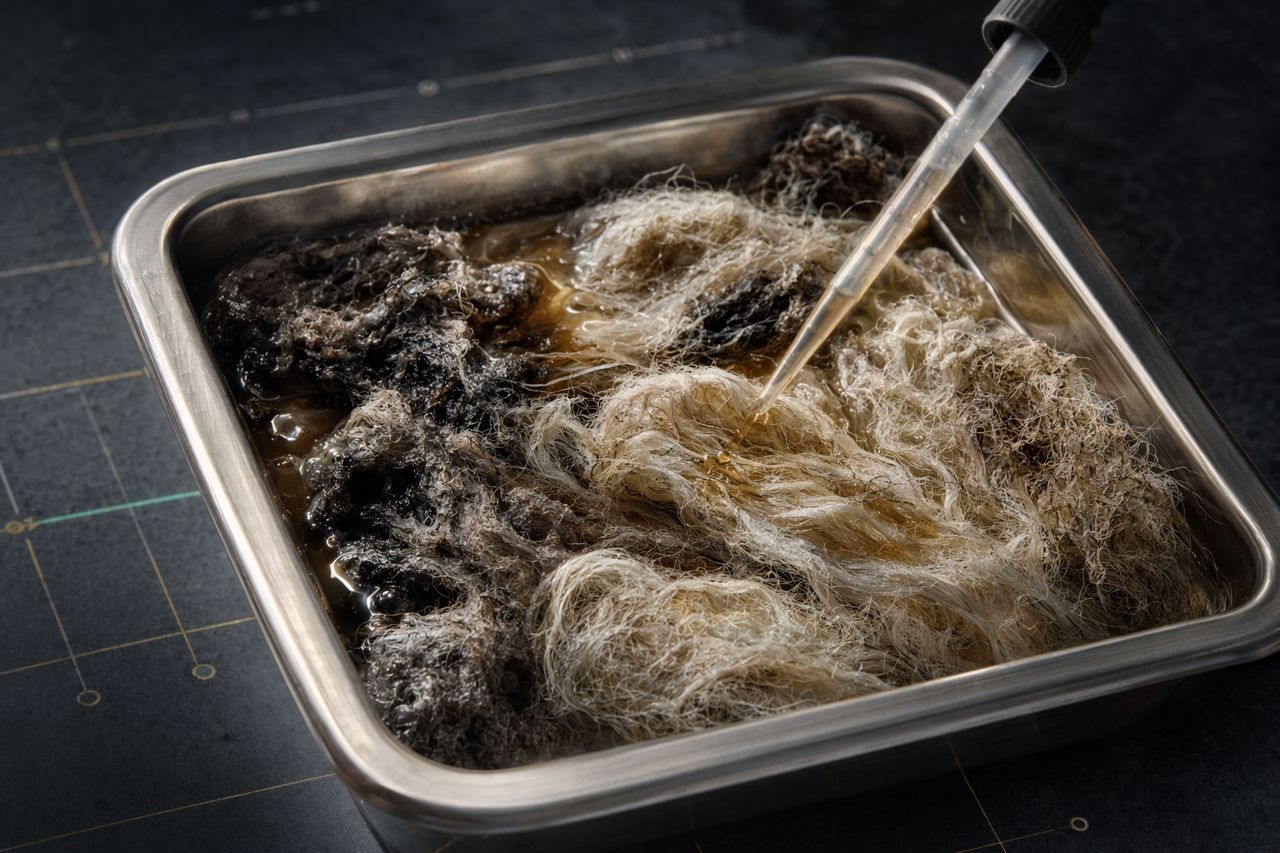
Traditional caustic and sulfide hair removal on sheep and lamb skin is polluting and slow. It can take 10-12 hours, damages skin fiber, raises defect rates and wastes raw material. A sheepskin trial replaced that chemistry with an industrial keratinase concentrate. The concentrate fits existing tannery production lines, with no reactor modifications needed. It ran at room temperature in tap water, inside the conventional soaking and pre-treatment workflow. Hair removal was much faster than the traditional method, although the exact time saved was not quantified. Hair removal was complete with a light touch and no residual hair. Skin damage was zero, with fiber integrity intact and fewer defects. Run the same comparison on your own skins before changing a line.
In enzymatic dehairing the dials interact. A dehairing enzyme loosens hair roots quickly. Dehairing improves as dose, temperature and treatment time increase. Too much dose or too high a temperature can damage the grain. The effective pH range is 6.0-12.0, with an optimum of 6.0-8.0. The effective temperature range is 20-60 degrees C, with an optimum of 30-40 degrees C. It comes in 25 kg drums. Set the pilot dose low and step it up against grain quality, not against speed alone.
Keratinase Enzyme can be discussed for different manufacturing and handling preferences, including liquid or dry formats where appropriate. The right format depends on dosing infrastructure, storage conditions, operator handling, and whether the enzyme is being used in a controlled treatment reactor or directly within a process stage.
Keratinase Enzyme Solutions can support specification discussions for pilot trials, plant-scale supply planning, and recurring procurement programs. We focus on fit before volume: the enzyme should match the substrate, process window, and commercial target.
Wholesale and bulk keratinase for tanneries, leather processors and hair-waste treatment operators. Include:
Photos or a short description of the hair-rich stream and the downstream route help us answer faster. Pricing and terms are quoted per order. Request a quote
Tell us your application and volume — we reply with pricing and lead time.
We have received your message. We will reply by email.