Keratinase for Feather Waste Valorization | QuillFoundry

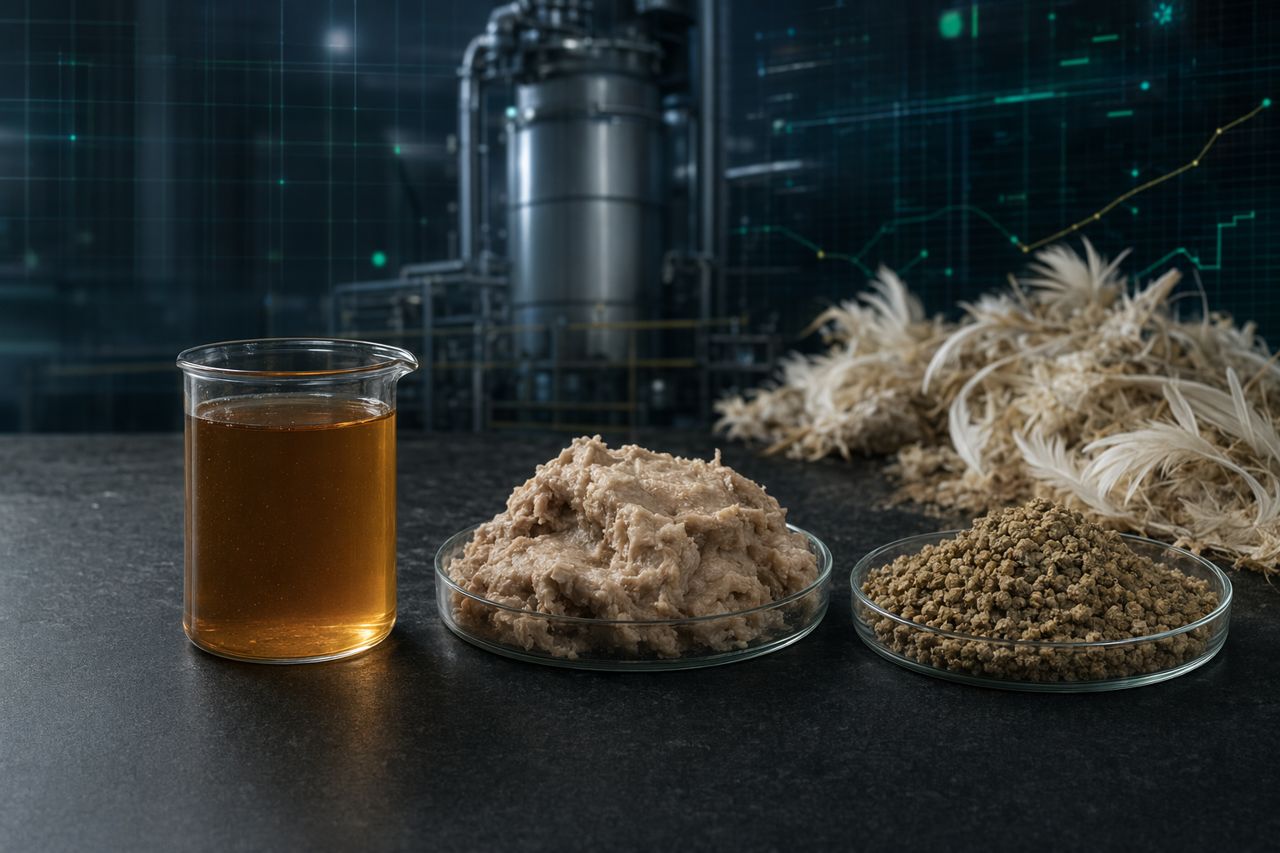
Use Keratinase Enzyme to help convert poultry feather waste into more processable protein-rich hydrolysates for feed ingredient upgrading, fertilizer inputs, and downstream protein recovery.

Request pricing

Keratinase for Feather Waste Valorization

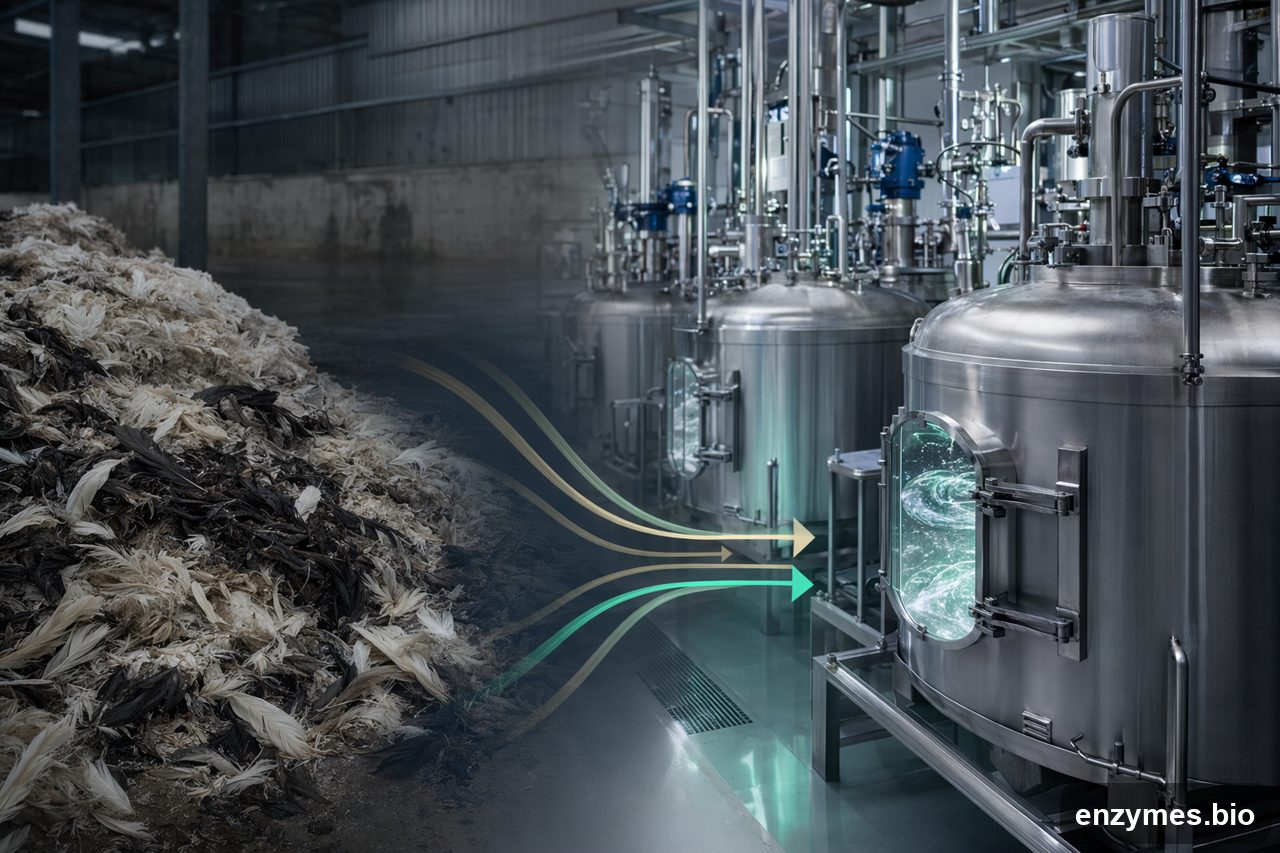
Poultry feathers are abundant, protein-rich, and difficult to process. Their keratin structure is built for durability: crosslinked, fibrous, insoluble, and resistant to ordinary proteolysis. That makes feather waste a cost center when it is handled as disposal, but a conversion opportunity when the structure is opened under controlled process conditions.

Keratinase Enzyme helps processors hydrolyze feather keratin into more manageable peptide-rich material for feed ingredient upgrading, fertilizer inputs, fermentation nutrients, and other downstream uses where improved solubility, handling, and protein accessibility matter.

QuillFoundry supports feather valorization programs where conversion must fit the plant—not the other way around.


Why feathers need a keratin-specific approach

Feathers are not just “protein waste.” They are a dense keratin substrate with a high degree of structural resistance. Conventional thermal or chemical treatment can make feathers more processable, but harsh conditions may create odor, darkening, inconsistent digestibility, high energy demand, or downstream formulation constraints.

Keratinase Enzyme is used to help break down the keratin matrix more selectively, supporting a process that can be tuned for:

  • Improved feather softening and hydrolysis
  • Higher conversion into soluble or dispersible protein fractions
  • Reduced reliance on severe thermal or chemical treatment
  • More consistent slurry behavior for pumping, mixing, and separation
  • Better downstream fit for feed, fertilizer, or protein recovery workflows

The result is not just degradation. It is controlled biological deconstruction of a difficult biomass stream.


Application targets

Feed ingredient upgrading

Keratinase-assisted hydrolysis can improve the accessibility of feather protein by converting resistant keratin into smaller peptide fractions. For feed manufacturers, rendering operations, and protein ingredient developers, this may support improved processability and more consistent ingredient preparation.

Potential objectives include:

  • Upgrading feather meal process streams
  • Improving protein dispersion before drying or blending
  • Supporting peptide-rich ingredient development
  • Reducing variability caused by feather source, age, or pre-treatment history

Organic fertilizer and biostimulant inputs

Hydrolyzed feather material can serve as a nitrogen-rich input for fertilizer and soil amendment products. Enzymatic conversion can help produce a more uniform hydrolysate for blending, granulation, liquid formulation, or controlled downstream drying.

Typical process goals include:

  • Better slurry homogeneity
  • Improved compatibility with blending systems
  • Increased availability of protein-derived nitrogen fractions
  • Lower odor pressure versus overly aggressive chemical processing

Fermentation and protein recovery workflows

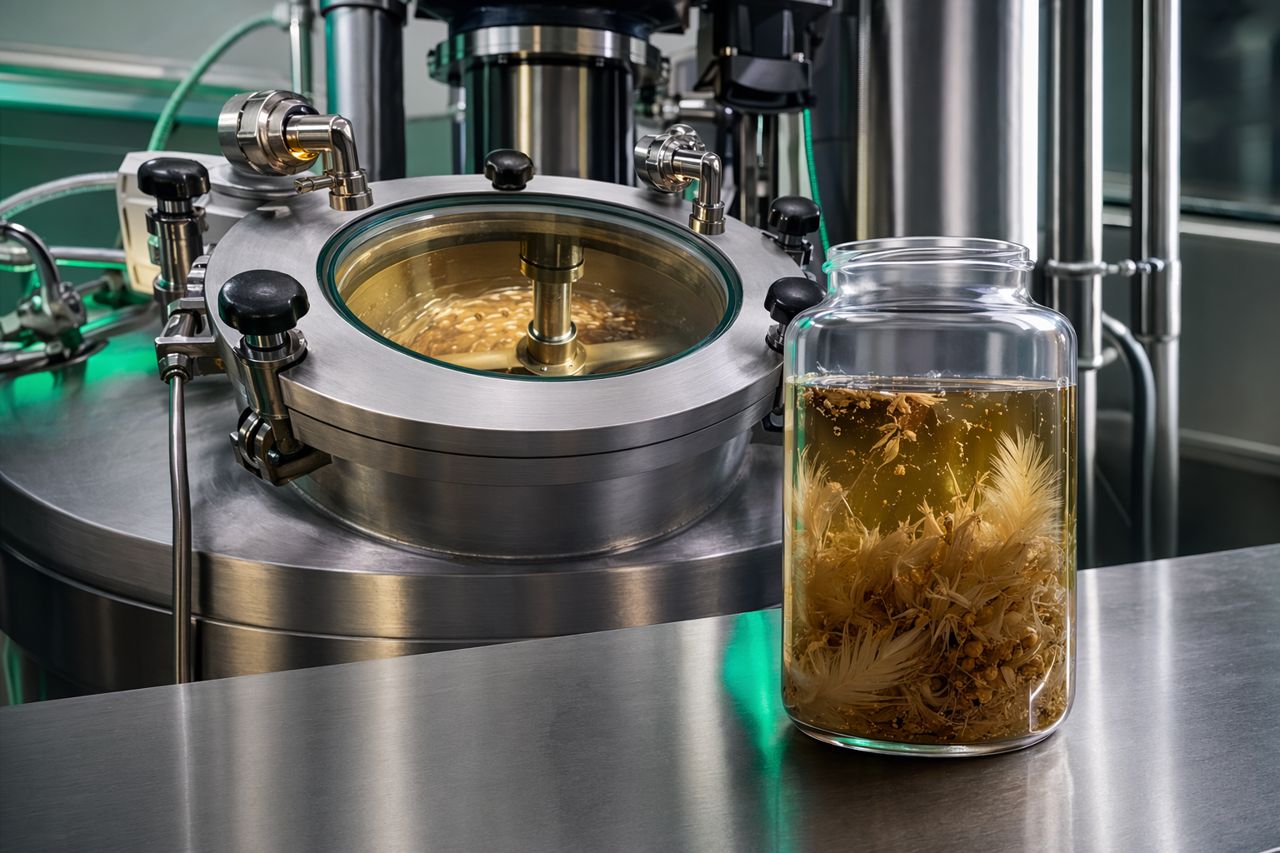
Feather hydrolysates may be evaluated as nutrient inputs or protein-derived intermediates in industrial biotechnology. Keratinase Enzyme can support substrate preparation by improving solubilization and reducing the particle burden before clarification, concentration, or formulation.


Where Keratinase Enzyme fits in the process

Keratinase can be integrated into batch, fed-batch, or continuous-prep workflows depending on plant design and substrate handling. It is commonly evaluated after size reduction and wetting, and before separation, drying, blending, or final formulation.

A practical feather valorization workflow may include:

  1. Raw feather receiving and screening
    Remove foreign matter and stabilize incoming material quality.

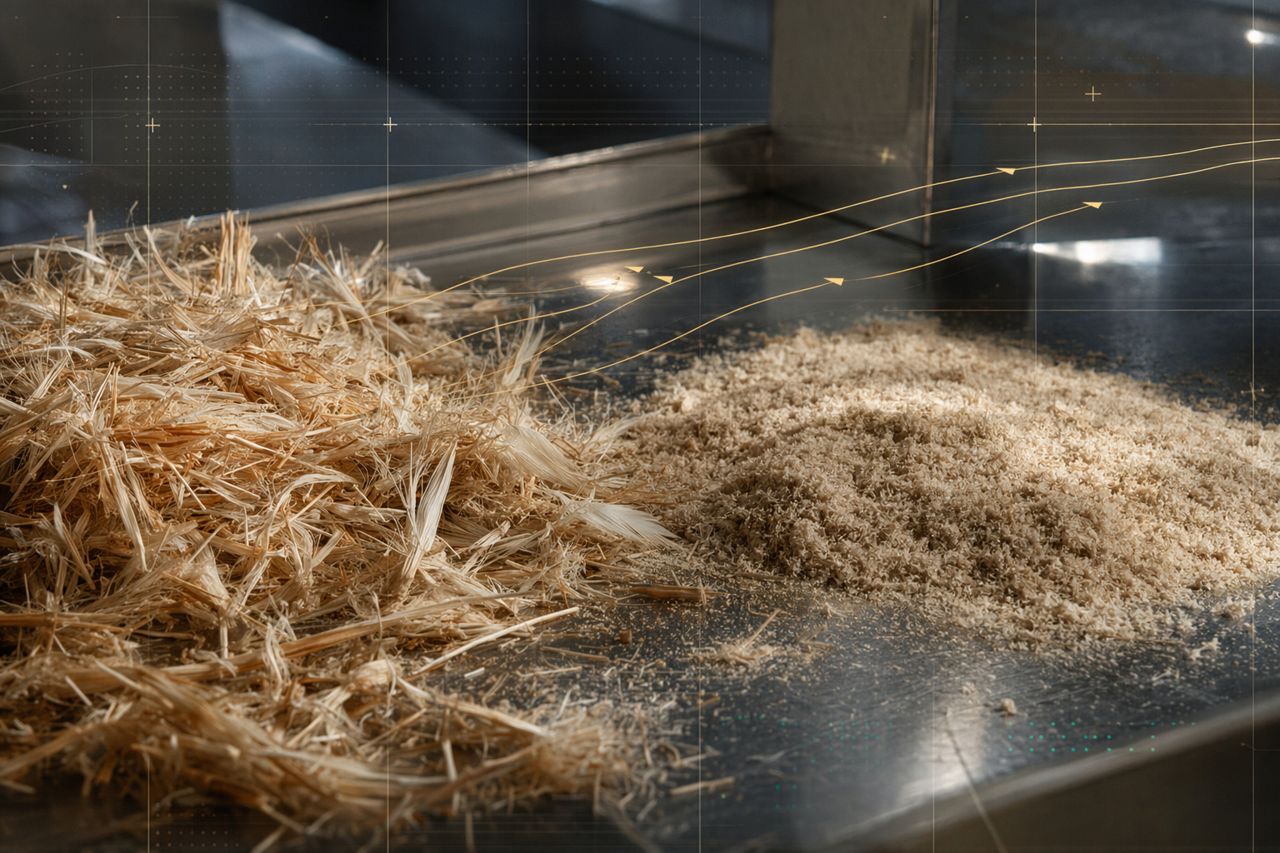
  2. Size reduction or wet milling
    Increase accessible surface area and improve slurry uniformity.

  3. Hydration and process conditioning
    Adjust process conditions for enzyme contact, mixing, and substrate penetration.

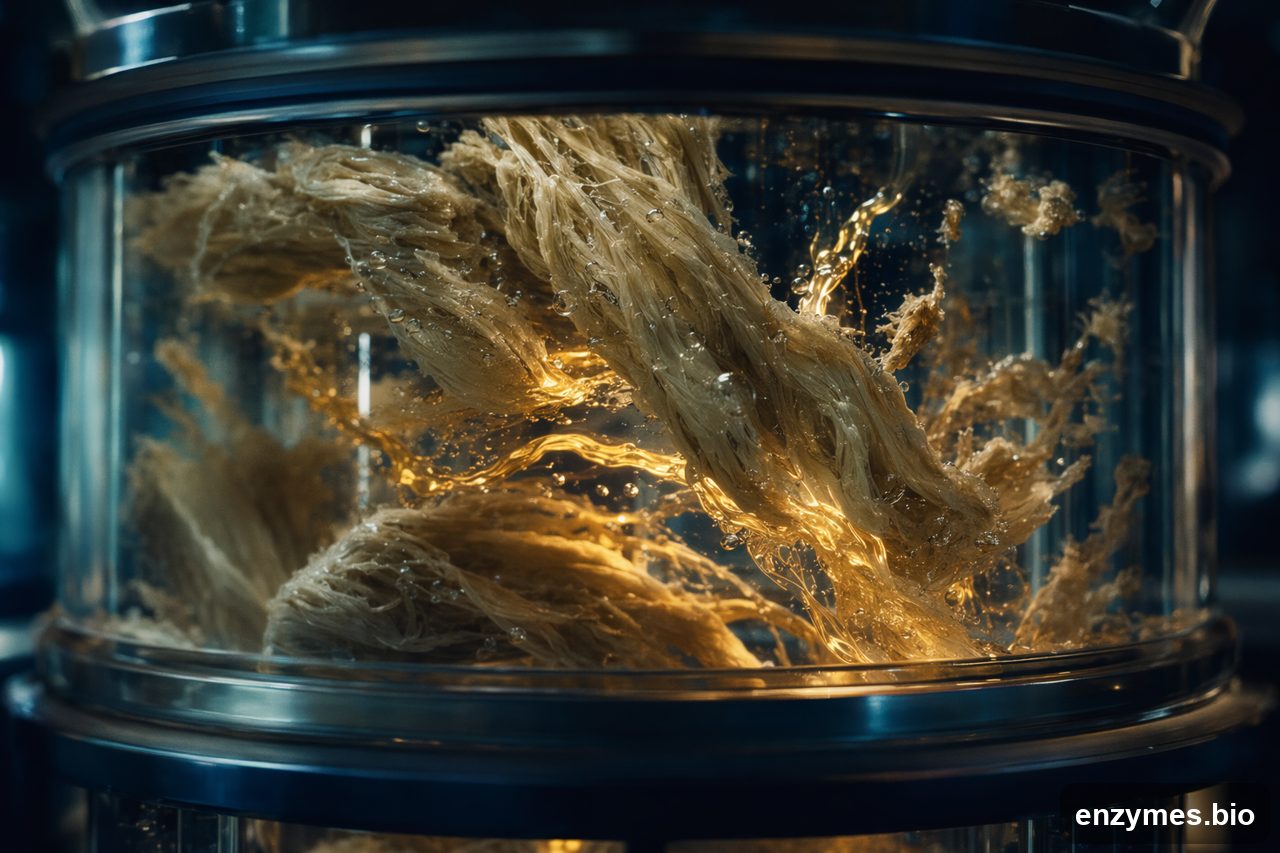
  4. Keratinase-assisted hydrolysis
    Open the keratin structure and convert fibrous material into more processable protein fractions.

  5. Solid-liquid management
    Separate, concentrate, or retain fractions depending on product target.

  6. Drying, blending, or formulation
    Convert hydrolysate into feed, fertilizer, or intermediate product formats.

QuillFoundry helps teams evaluate the enzyme within the actual process envelope: substrate loading, agitation, residence time, pretreatment severity, thermal profile, pH window, downstream separation, and finished-product specification.


Commercial value for feather processors

Feather waste valorization is most successful when the enzyme improves economics, not just lab conversion. Keratinase Enzyme can contribute value across operations, formulation, and sustainability targets.

Process value

  • Converts a difficult, fibrous waste stream into a more manageable material
  • Supports lower-severity processing strategies where applicable
  • Improves slurry flow and handling consistency
  • May reduce unconverted feather burden in downstream equipment
  • Helps make substrate variability easier to manage

Product value

  • Supports protein-rich hydrolysate generation
  • Enables development of feed, fertilizer, or specialty protein inputs
  • Helps improve uniformity of intermediate streams
  • Supports fractionation or concentration strategies
  • Provides a route from disposal material to saleable ingredient platforms

Operational value

  • Fits existing wet-processing infrastructure in many cases
  • Can be evaluated alongside current rendering, hydrolysis, or fermentation steps
  • Allows process teams to tune conversion intensity to the target product
  • Supports measurable trials using plant-relevant substrates and realistic hold times

Substrate flexibility

Keratinase Enzyme can be evaluated on multiple feather-derived streams, including:

  • Whole poultry feathers
  • Chopped or milled feathers
  • Washed feather fractions
  • Rendered feather meal requiring further hydrolysis
  • Feather process residues
  • Mixed keratin-rich streams where feathers are the dominant substrate

Substrate preparation matters. Feather size, moisture, prior heat exposure, fat content, mineral load, and contamination level can all influence hydrolysis behavior. QuillFoundry can help define a trial plan that separates enzyme performance from upstream variability.


Formulation and processing considerations

Every feather conversion project has a different endpoint. A feed hydrolysate, liquid fertilizer input, dry powder, fermentation nutrient, and protein concentrate do not need the same hydrolysis profile. We help buyers and technical teams align enzyme use with the intended output.

Key considerations include:

  • Target product form: liquid, paste, dried meal, soluble fraction, or blended input
  • Conversion depth: partial softening, high-solids hydrolysis, or peptide-rich soluble phase
  • Downstream equipment: pumps, screens, centrifuges, evaporators, dryers, blenders
  • Pretreatment strategy: mechanical, thermal, alkaline, or combined conditioning
  • Contaminant control: fat, ash, grit, residual processing chemicals, microbial load
  • Specification targets: protein profile, solubility, odor, color, moisture, flowability

The right enzyme strategy is not simply “more hydrolysis.” It is the conversion level that supports the customer’s economics and product specification.


Trial design for industrial buyers

For a meaningful Keratinase Enzyme evaluation, we recommend testing against process-relevant success criteria rather than isolated lab observations.

Useful evaluation outputs may include:

  • Degree of feather disintegration under selected process conditions
  • Change in soluble protein or peptide fraction
  • Slurry viscosity and pumpability
  • Residual solid load after hydrolysis
  • Odor and color shift versus current process
  • Drying behavior and final material handling
  • Compatibility with downstream blending or formulation
  • Economic comparison against current disposal or treatment route

QuillFoundry can support screening trials, scale-up planning, and process-fit discussions for feather streams with known composition and defined commercial targets.


Typical buyers and use cases

Keratinase Enzyme for feather waste valorization is relevant for:

  • Poultry processors
  • Rendering operations
  • Feed ingredient manufacturers
  • Fertilizer and soil amendment producers
  • Industrial biotechnology companies
  • Protein hydrolysate developers
  • Waste-to-value project teams
  • Contract processors handling animal by-product streams

Whether the goal is to reduce waste liability, create a differentiated ingredient, improve feather meal quality, or prepare a hydrolysate for downstream recovery, the enzyme program should be designed around your plant reality.


What QuillFoundry needs to recommend a starting point

To scope a practical recommendation, share the following if available:

  • Feather source and approximate composition
  • Current pretreatment or rendering conditions
  • Desired end product and specification targets
  • Batch size or expected throughput
  • Existing tank, mixer, heating, and separation equipment
  • Current pain points: odor, conversion, viscosity, drying, disposal cost, or inconsistency
  • Any regulatory or end-market constraints for feed, fertilizer, or specialty applications

We use this information to suggest a commercially sensible trial direction and quote structure.


Request a quote

Ready to evaluate Keratinase Enzyme for feather waste valorization? Send your substrate details and target application. Our team will respond with pricing guidance and next-step recommendations for your process.


Keratinase for Feather Waste Valorization | QuillFoundryKeratinase for Feather Waste Valorization | QuillFoundryKeratinase for Feather Waste Valorization | QuillFoundry

More from QuillFoundry

Request pricing & specs

Tell us your application and volume — we reply with pricing and lead time.