A practical technical guide to how Keratinase Enzyme converts feathers, hair, wool, bristles, and other keratin-rich materials into lower-molecular-weight peptide streams for industrial use.
Unlock value from the world’s toughest keratin streams.
Keratin is a difficult protein by design. Feathers, hair, wool, bristles, horns, claws, and hide-derived residues are built from tightly packed protein fibers reinforced by crosslinks and hydrophobic regions. That structure gives keratin its mechanical strength, chemical resistance, and poor solubility — the same properties that make it challenging for processors trying to recover value from keratin-rich streams.
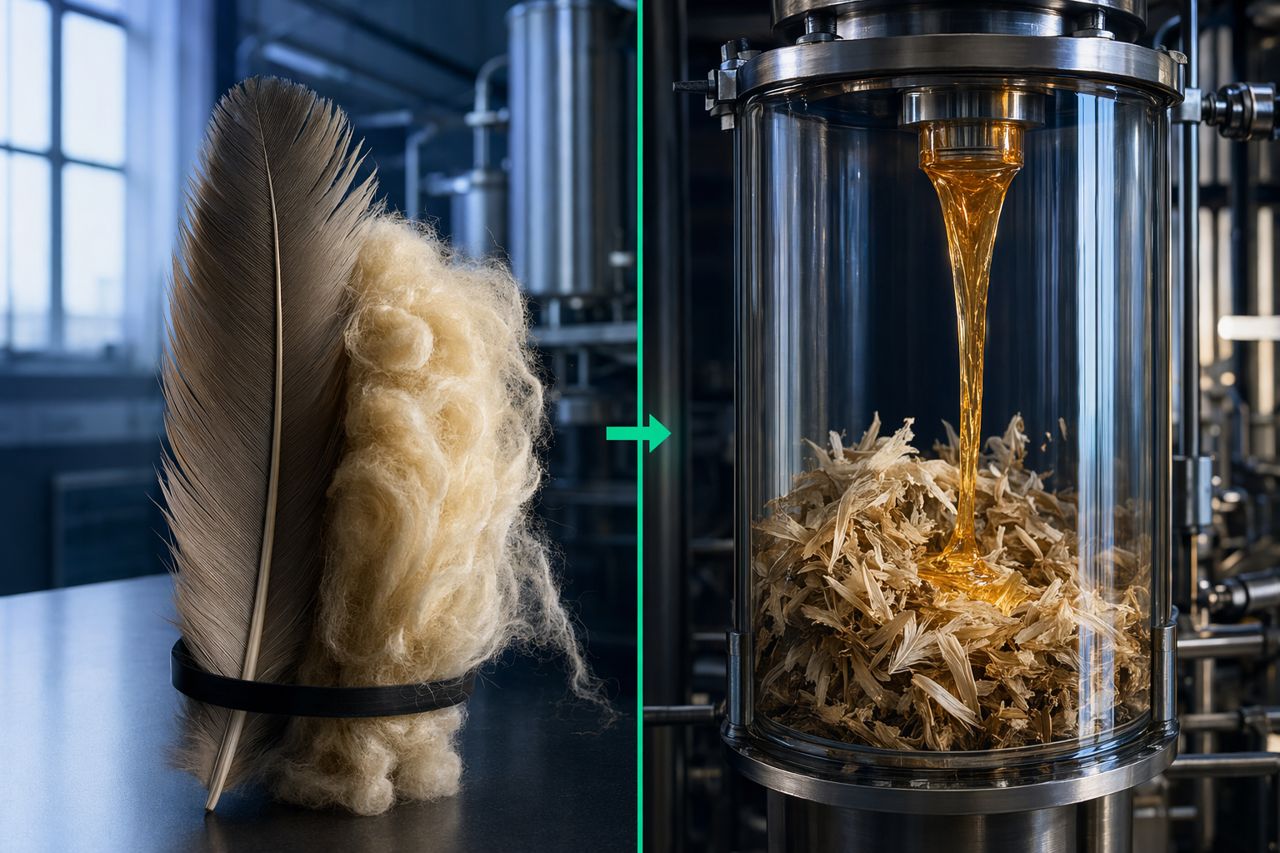
Keratinase Enzyme gives technical teams a controlled biological route for opening that structure. Instead of relying only on harsh thermal or chemical treatment, keratinase attacks accessible peptide bonds, progressively loosening the keratin matrix and converting insoluble fiber into smaller fragments, soluble peptides, and processable protein hydrolysates.

For B2B buyers, the important question is not simply “does it digest keratin?” The useful question is: how does the enzyme fit the substrate, the process window, and the downstream value target?
Keratinase works by combining two practical effects:
As the outer structure weakens, more internal sites become available. Conversion then moves from surface roughening to fiber softening, fragmentation, and solubilization. The final material profile depends on substrate preparation, process conditions, enzyme dose strategy, residence time, and any supporting pretreatment.
This makes keratinase valuable in applications where processors need a more controllable path from tough keratin waste or by-product streams to functional protein outputs.
Keratin is not just another protein. Its resistance comes from multiple structural features working together:
A conventional protease may act on exposed proteins but often struggles to meaningfully open the keratin matrix. Keratinase is selected for its ability to act on keratin-rich substrates where ordinary proteolysis is too slow, incomplete, or inconsistent for industrial conversion.
Keratinase does not “melt” keratin in one step. The mechanism is progressive.
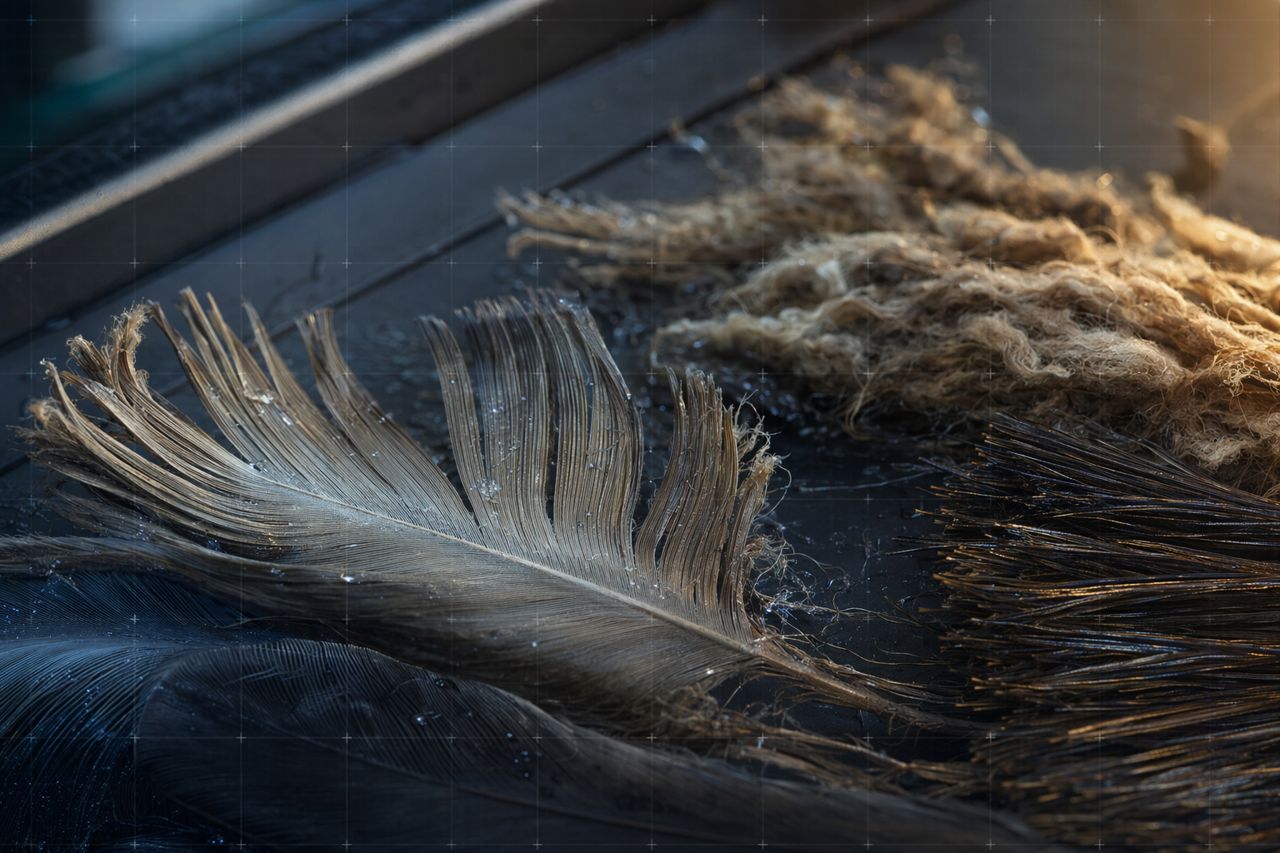
The substrate must first become accessible. Feather meal, clipped hair, wool scouring residues, bristles, or hide trimmings may require size reduction, hydration, mixing, or pretreatment to increase exposed surface area. Poor wetting slows enzyme contact, even when the enzyme itself is suitable.
Keratinase molecules contact exposed keratin regions and bind near vulnerable protein domains. Surface area, cleanliness, fat content, mineral load, and residual processing chemicals can all influence how efficiently the enzyme contacts the substrate.
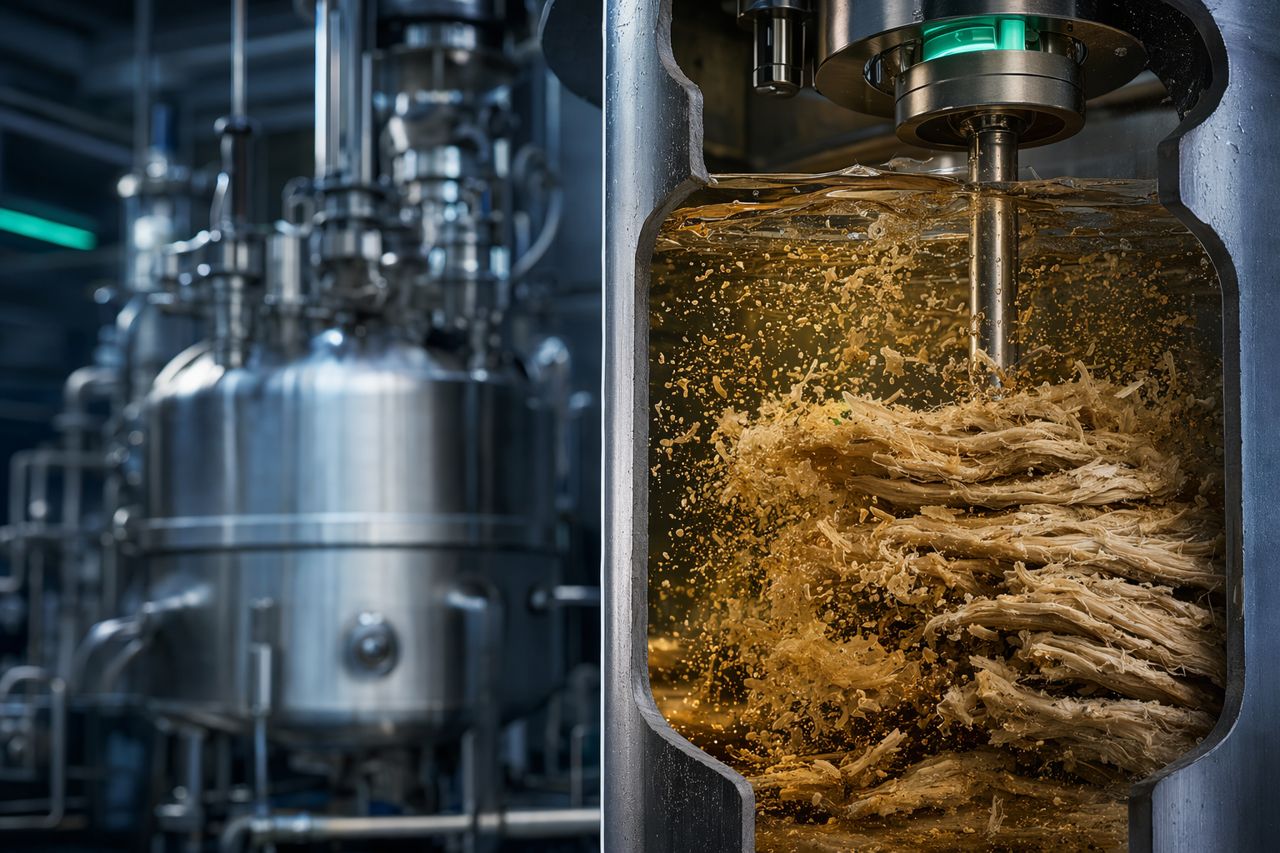
Once positioned, the enzyme cuts peptide bonds in accessible regions of the keratin protein. These cuts reduce fiber strength and create smaller fragments. As more bonds are cleaved, the substrate becomes less ordered and easier to penetrate.
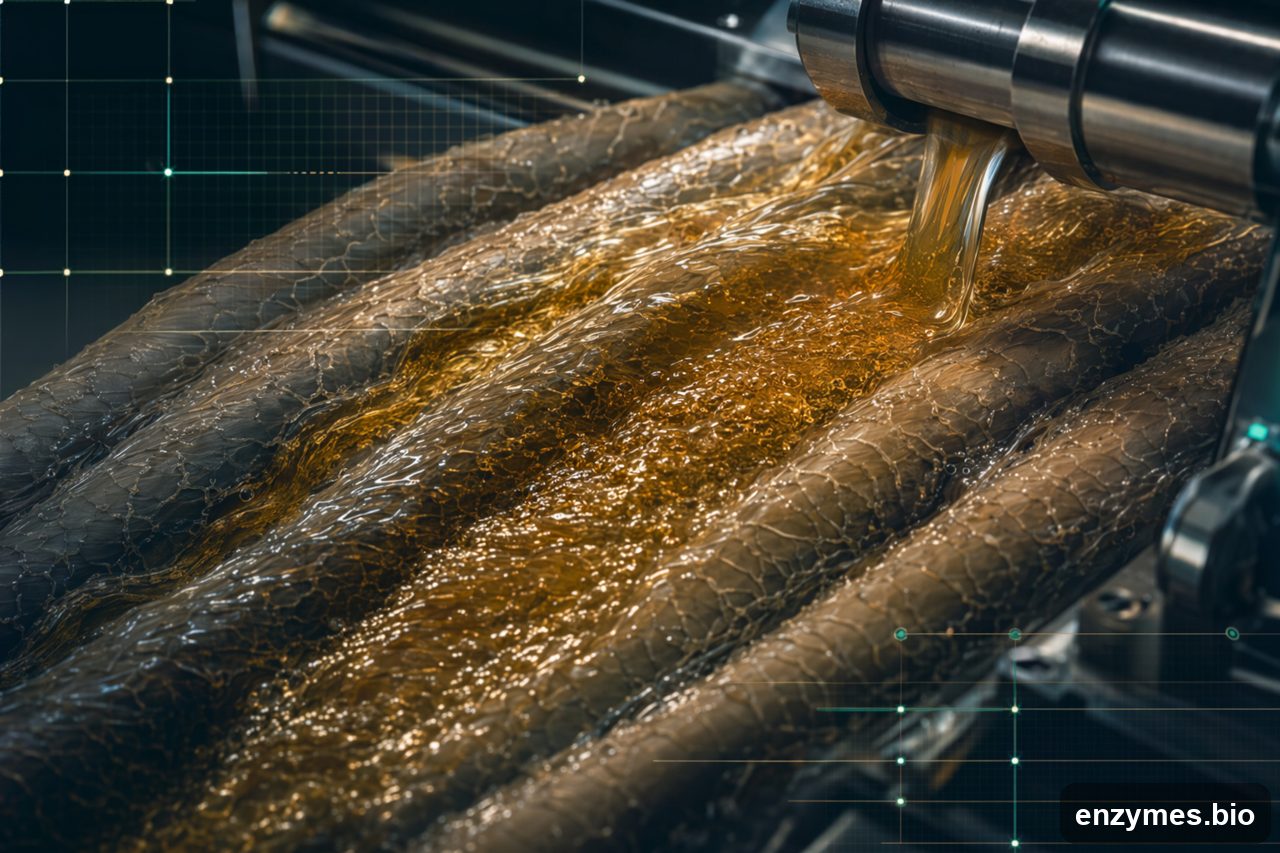
Initial cleavage creates new access points. This is why keratin conversion can accelerate after the surface begins to open. The process may move from intact fiber to swollen fiber, then to loosened fibrils, fragments, suspended solids, and soluble peptide material.
The output is not a single molecule. It is typically a distribution of protein fragments and peptides. The desired distribution depends on the buyer’s application: nutrient release, functional protein recovery, formulation behavior, downstream filtration, or waste-load reduction.
Disulfide crosslinks are one reason keratin is so durable. Keratinase is a protease, so its direct role is cutting peptide bonds. However, the crosslinked architecture determines whether those peptide bonds are exposed enough to be attacked efficiently.
In some processes, mechanical, thermal, alkaline, reducing, oxidative, or combined pretreatment may be evaluated to improve enzyme access. The goal is not always maximum breakdown. In commercial operations, the better target is often controlled conversion: enough opening to achieve the desired hydrolysate profile without creating unnecessary cost, color, odor, salt load, or downstream handling problems.
A keratinase program should be screened against the real material stream, not only a clean reference substrate. The most important variables are practical and plant-facing:
Feathers, wool, hair, bristles, and hide residues behave differently. Even within one category, prior washing, drying, milling, rendering, curing, or chemical exposure can change enzyme response.
Smaller particles usually provide more accessible surface, but aggressive milling adds cost and can affect slurry handling. The right preparation balances conversion rate with energy use and equipment fit.
Keratin streams can float, clump, trap air, or resist hydration. Mixing design and feed preparation often determine whether enzyme contact is consistent across the batch or continuous system.
Keratinase performance depends on the operating environment. Buyers should match the enzyme to the plant’s preferred process window, cleaning constraints, material compatibility, and downstream requirements rather than forcing the process around a lab-only condition.
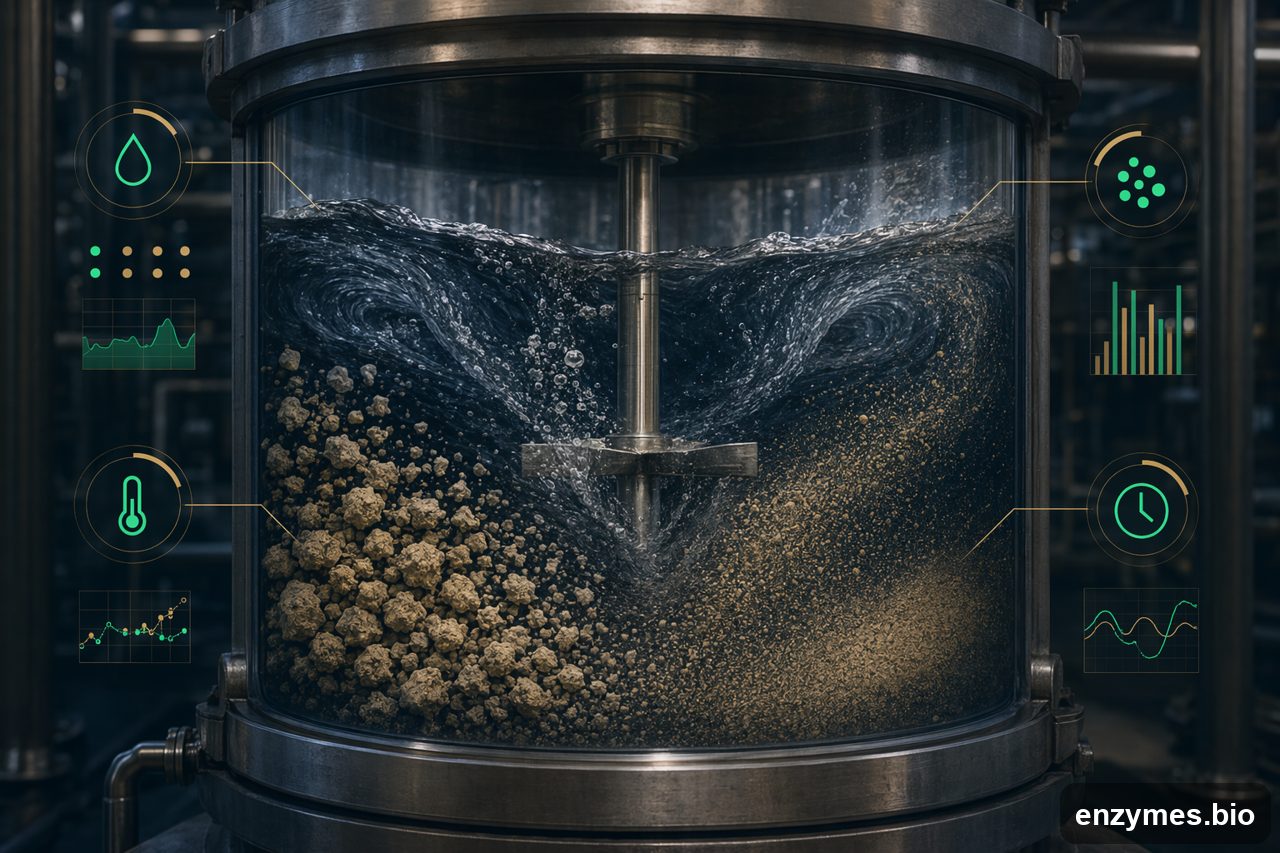
Higher solids can improve throughput but may reduce mixing efficiency, heat transfer, and enzyme access. Low solids may convert more easily but increase water handling and evaporation burden.
Keratin conversion is a time-dependent process. The ideal endpoint depends on whether the target is partial softening, improved digestibility, soluble peptide generation, or a specific hydrolysate behavior.
If pretreatment is used, it should be assessed for enzyme compatibility and downstream impact. A pretreatment that improves conversion but creates filtration, odor, corrosion, or formulation issues may not be commercially attractive.
Technical evaluation should connect mechanism to measurable operating value. Depending on the use case, success may include:
The enzyme is only one part of the conversion system. The commercial result comes from aligning enzyme selection, substrate preparation, reactor design, process endpoint, and final product specification.
Keratinase is relevant anywhere keratin-rich material is abundant, underused, or difficult to process:
Each application has its own constraints. A feather stream from one facility may not behave like another. A wool residue with finishing chemistry may require a different approach from raw scoured wool. That is why substrate-specific evaluation matters.
A useful evaluation starts with the commercial endpoint, then works backward into process design.
Are you trying to reduce disposal cost, create a soluble hydrolysate, improve nutrient availability, soften a fiber, generate a peptide ingredient, or make a mixed stream easier to separate? The target determines the conversion endpoint.
Document source, prior processing, moisture state, particle size, contaminants, seasonal variation, and any chemicals already present. Keratinase performance is highly dependent on what the enzyme can physically access.
Review the plant’s workable pH, temperature, mixing, residence time, solids loading, and cleaning requirements. The best enzyme choice is the one that fits the operation, not just the one that performs under idealized conditions.
Hydrolysis changes viscosity, odor profile, solids behavior, filterability, and drying performance. These downstream effects should be part of the evaluation from the beginning.
Lab feasibility should be followed by pilot conditions that preserve the realities of mixing, heat transfer, feed variability, and residence time. Keratin-rich slurries can behave very differently as volume increases.
To recommend a fit and prepare pricing, Keratinase Enzyme Solutions typically needs:
The more specific the process context, the more useful the recommendation.
Keratinase is most valuable when it is treated as a conversion tool, not a commodity additive. The enzyme must be matched to a real substrate, a real plant window, and a real economic endpoint. Done well, it can turn stubborn keratin streams into controllable peptide outputs with measurable downstream value.
If you are evaluating Keratinase Enzyme for feathers, wool, hair, bristles, hide residues, or mixed keratin material, send us the process context. We will help assess fit, supply format, evaluation path, and commercial pricing.
Wholesale and bulk supply for manufacturers, processors, distributors and resellers. Send three things:
Pricing and terms are quoted per order. Request a quote
Tell us your application and volume — we reply with pricing and lead time.
We have received your message. We will reply by email.