Bulk keratinase for hydrolysate producers, toll processors and ingredient developers converting feathers, hair, wool and bristles into keratin protein hydrolysates. Wholesale supply, quoted per order.
Unlock value from the world’s toughest keratin streams.
Feathers, hair, wool, bristles and hide-adjacent residues are protein-dense but hard to hydrolyze cleanly. Their crosslinked fiber architecture leads to uneven slurries, heavy filtration load, odor and variable peptide output when ordinary hydrolysis is used alone. Keratinase Enzyme gives processors a more controlled biological route from these residues into hydrolyzed protein streams.
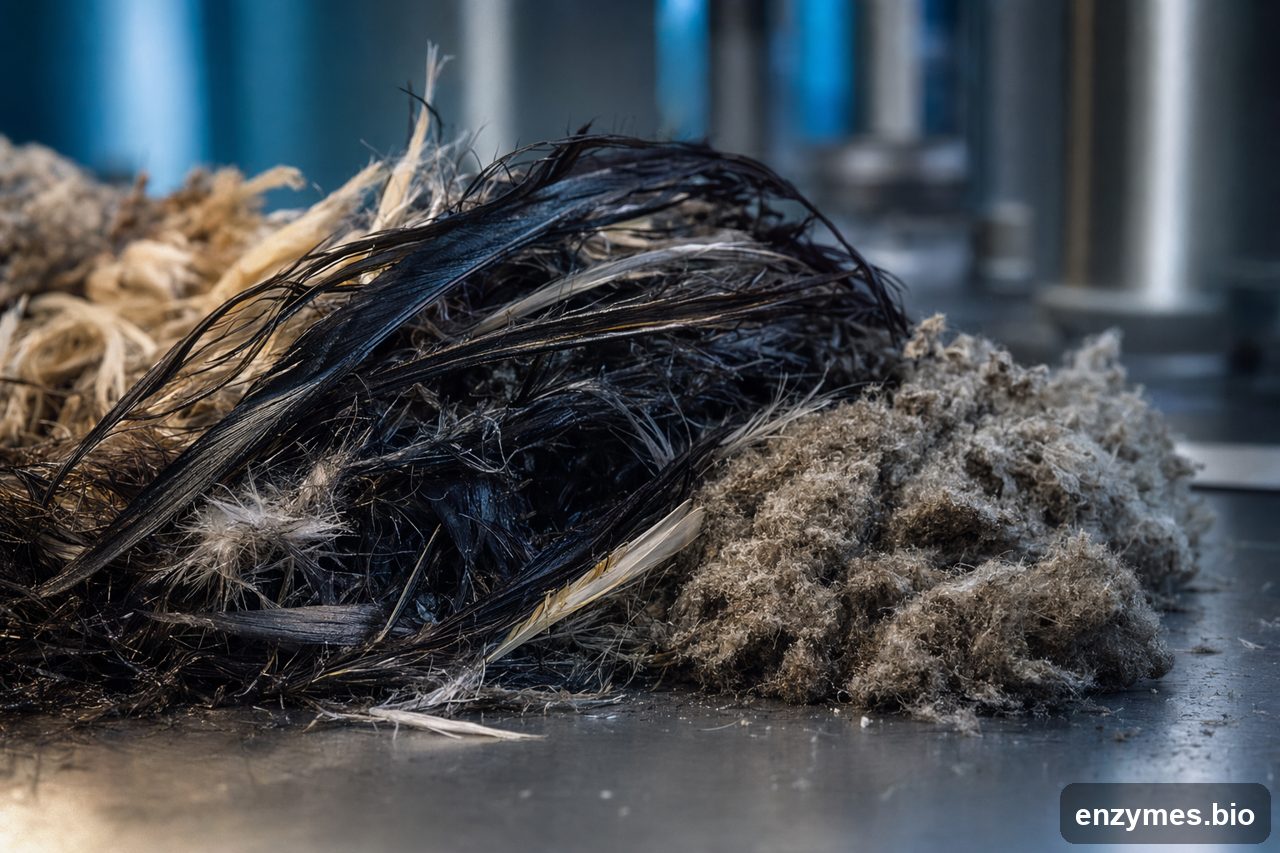
Keratinase Enzyme Solutions supplies keratinase in bulk to hydrolysate producers, toll manufacturers, ingredient developers and formulation teams, and to the distributors who serve them. Pricing is quoted per order.
Making keratin hydrolysate? Send the product you need, the quantity per order or per month, and the destination country. Request a quote
Keratin's strength comes from dense fiber packing, hydrophobic regions and stabilizing crosslinks. Keratinase opens that structure so the material moves from tough, insoluble fibers toward a workable peptide-rich stream. In practice that supports:

A feather stream and a wool stream both contain keratin, but they behave differently in hydration, mixing, enzyme access and separation. Substrate history, cleaning, particle size, moisture, fat, ash and prior heat or chemical exposure set the process window.
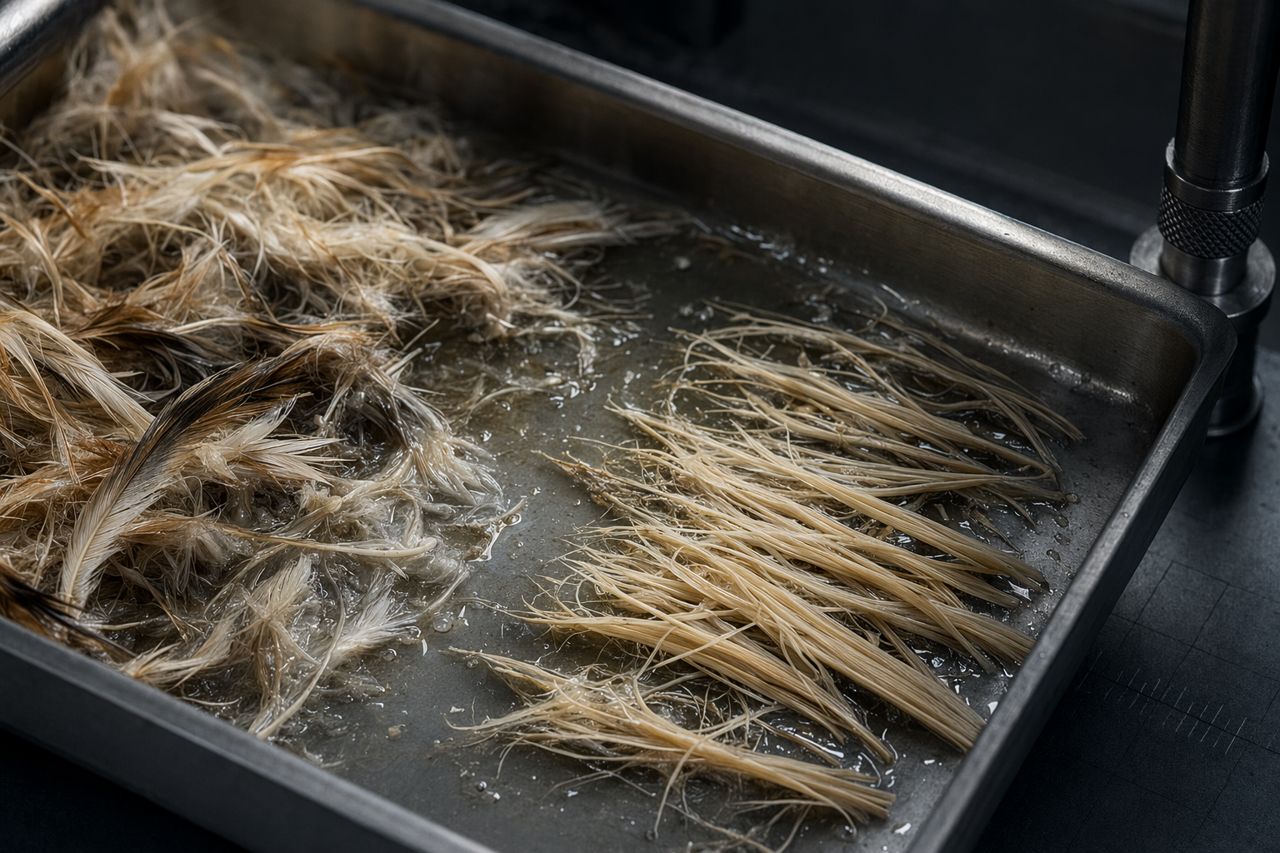
Size reduction, hydration, cleaning or thermal conditioning exposes fiber surface and creates a pumpable mass. The aim is enough access for predictable conversion, not over-processing.
Keratinase is added under controlled conditions to release soluble protein fragments and peptides. Residence time, agitation, solids loading and pretreatment are set around the target hydrolysate profile.
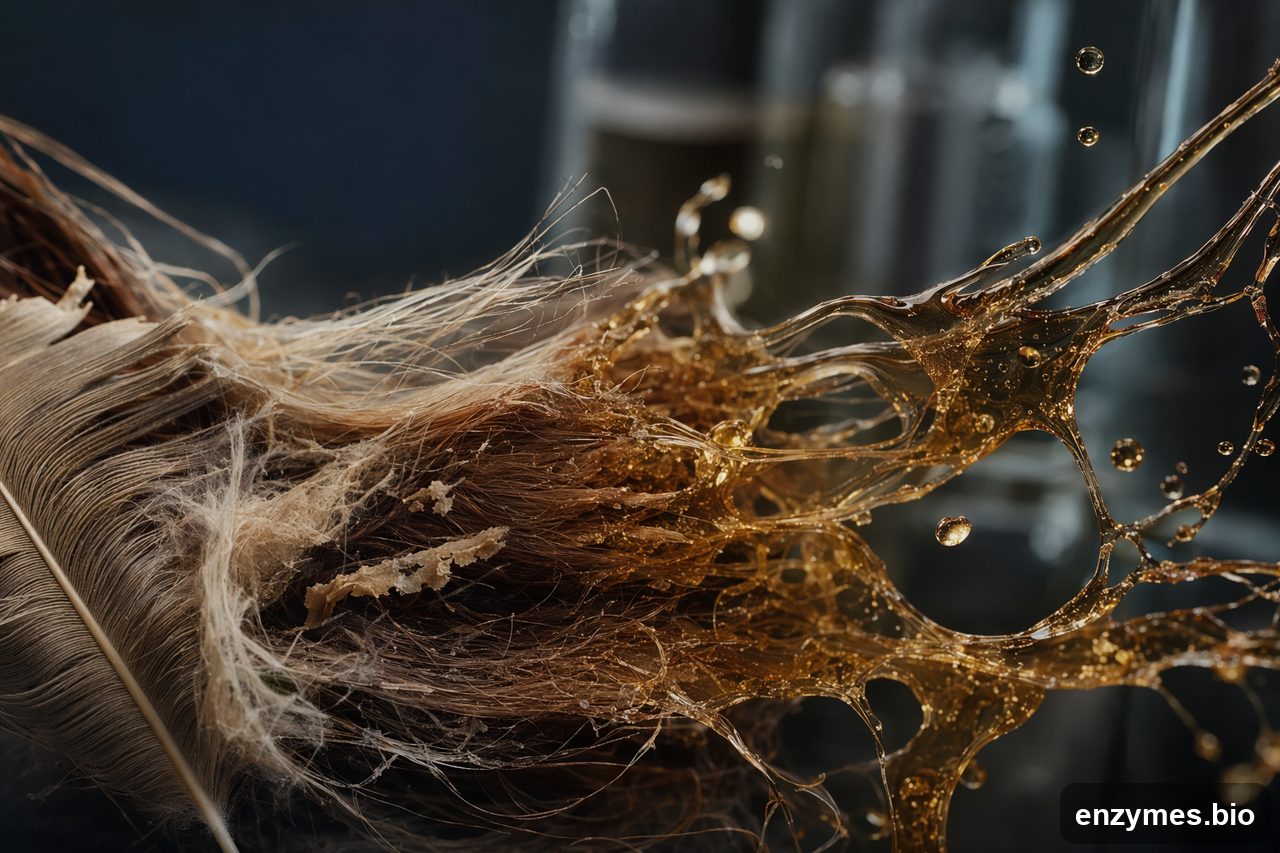
Residual solids are separated, the liquid phase clarified or concentrated, or the stream blended into a formulation. Judge the enzyme by how the treated stream behaves in your separation equipment, not only by conversion.
Screen the hydrolysate for solubility, viscosity contribution, nitrogen profile, color, odor, compatibility, stability and performance in the finished application.
Wholesale and bulk keratinase for hydrolysate producers, toll processors, ingredient developers and distributors. Include:
Pricing and terms are quoted per order. Request a quote
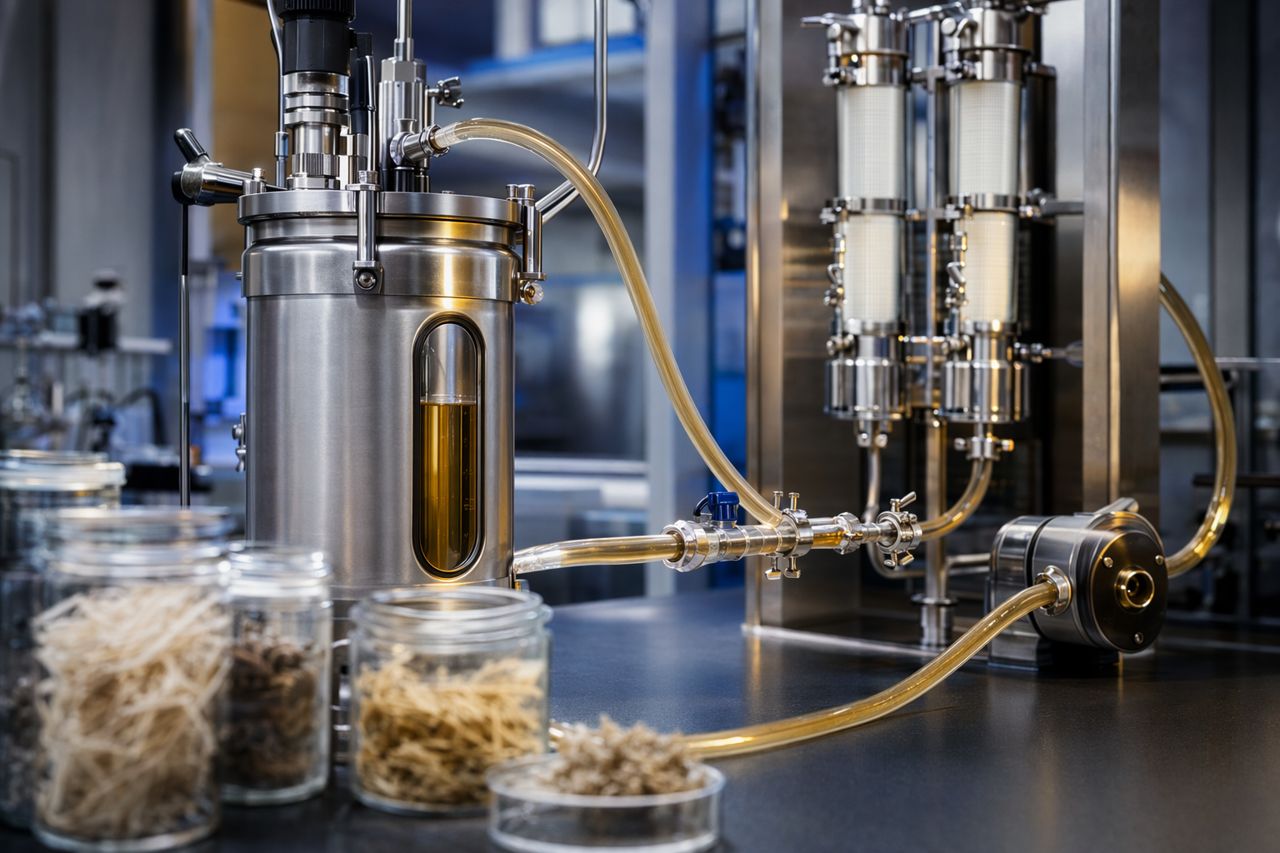
Tell us your application and volume — we reply with pricing and lead time.
We have received your message. We will reply by email.